Updated
|
Personalized Learning in 2025: Revolutionizing Education
Explore how personalized learning is reshaping education in 2025—insights, policy, impact, and real-world models for students, parents, and educators.

Personalized Learning: Revolutionizing Education for the 21st Century

In an era of rapid technological change, evolving student needs, and rising expectations for equity and relevance in schooling, personalized learning has moved from a promising trend to a central pillar of innovation in K-12 and beyond. As we step into 2025, educators, parents, and policymakers confront both unprecedented opportunity and complex challenges in realizing genuinely individualized learning at scale.

This article updates and expands upon earlier thinking, drawing on the latest data, policies, and real-world models to explore how personalized learning is transforming education today.

What Is Personalized Learning — and Why It Matters

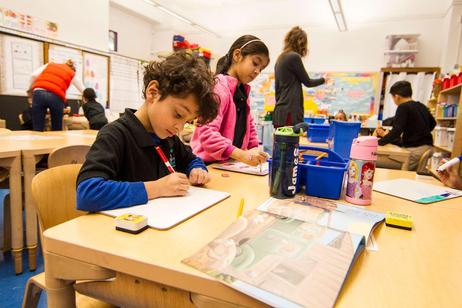
At its core, personalized learning refers to instructional approaches that tailor content, pace, and support to individual learners’ strengths, interests, and needs. Rather than a one-size-fits-all curriculum, it adapts to students’ performance in real time, often using data, assessments, and adaptive technologies to guide progress and interventions.

Key components include:

  • Student agency and voice, allowing learners to co-design their paths

  • Flexible pacing, ensuring mastery rather than seat time

  • Multiple modalities and pathways, from project-based work to micro-lessons

  • Continuous feedback loops and assessment, adjusting instruction as learning unfolds

Personalized learning aims not only to boost achievement but also to foster engagement, ownership, and a deeper alignment between schooling and individual potential.

The 2025 Landscape: Trends, Scale,

. . .read more

How Bullying Impacts Student Academic Performance in 2025

Updated
|
How Bullying Impacts Student Academic Performance in 2025
Explore how bullying harms student achievement, attendance, and well-being — and strategies schools use in 2025 to mitigate its effects.

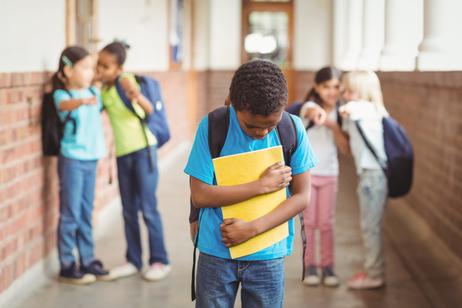
Bullying remains one of the most persistent and damaging threats to student well-being and academic success. While the association between bullying and poor academic outcomes has long been studied, recent research (2023–2025) and policy shifts sharpen our understanding of how and why bullying undermines learning—and what schools can do about it. Below is an updated review of the evidence, implications for stakeholders, and promising practices for mitigation.

Prevalence and Trends (2025 snapshot)

Before examining effects, it helps to contextualize how widespread bullying is today:

  • According to StopBullying.gov, about 19.2 % of students ages 12–18 (grades 6–12) reported being bullied during the 2021–22 school year. StopBullying.gov

  • In 2023, 26.5 % of U.S. teens (ages 13–17) said they had been cyberbullied, up from ~23.2 % in 2021.

  • New data from the International Trends in Mathematics and Science Study (TIMSS) show that among 4th graders who experienced bullying, 35 % scored below minimum proficiency, versus 25 % among non-bullied peers.

  • Moreover, recent surveys suggest an increase in bullying: some sources project a rise from ~25 % in 2023 to 35.5 % in 2025 (though methodological caution applies).

These statistics confirm that bullying—whether in person, relational (e.g. exclusion, rumor spreading), or digital—continues to affect millions of children and adolescents across settings.

Mechanisms: How

. . .read more

Bullying, Name-Calling & Put-Downs: Parent Guide 2025

Updated
|
Bullying, Name-Calling & Put-Downs: Parent Guide 2025
Practical tips for parents to address bullying, name-calling, and put-downs—with 2025 data, policies, and expert strategies.

Bullying, name-calling, and put-downs remain pervasive challenges in schools across the country—whether in person or online. As we move through 2025, shifting social dynamics, digital connectivity, and evolving school policies demand fresh understanding and strategies. This article offers parents current insights, best practices, and actionable steps to support children who face verbal or relational aggression at school or online.

Understanding the Scope in 2025

Prevalence and Patterns

Verbal and relational bullying—name-calling, insults, rumors, exclusion—are among the most common forms reported by students. According to the Anti-Bullying Alliance, about 40% of young people experienced bullying within the past year, with name-calling being the most frequent form (around 26%) anti-bullyingalliance.org.uk. In U.S. schools, data from the National Center for Education Statistics shows that in 2021–22, roughly 19 percent of students ages 12–18 reported being bullied at school.

The digital realm has only expanded the reach. As of 2025, about 26.5% of American adolescents report experiencing cyberbullying within the prior 30 days. Lifetime online harassment increases that share further: BroadbandSearch notes that lifetime cyberbullying victimization in the U.S. has risen to 58.2% BroadbandSearch.

Equally concerning, research linking bullying to mental health outcomes continues to grow. A large-scale study of over 95,000 students found that even mild bullying correlates with significantly elevated risk of anxiety, depression, poor sleep, PTSD symptoms, and behavioral issues—and the risk multiplies with severity arXiv.

Who Is At Risk—and Why It Matters

Certain

. . .read more

What Is a Magnet School? (2025 Guide)

Updated
|
What Is a Magnet School? (2025 Guide)
Explore what a magnet school is, how it works, and its benefits in 2025. Clear explanation for parents, students, and educators.

What Is a Magnet School?

A magnet school is a public school of choice—typically within a school district or consortium—that offers a specialized curriculum, theme, or instructional model to attract students from diverse neighborhoods. The term “magnet” reflects the school’s design to pull students across traditional attendance boundaries based on interest or fit. Magnet schools remain part of the public education system—they are tuition-free—but they differ from neighborhood schools by offering distinct programming or pedagogical approaches.

Originally conceived in the 1970s as tools for voluntary desegregation, magnet schools today emphasize educational innovation, specialization, and choice.

In 2025, magnet schools serve roughly 3.5 million students nationwide, operating in around 4,340 institutions—about 4.9% of all public school students.

History and Purpose

Origins in Desegregation

Magnet schools emerged during the desegregation era of the 1970s as a voluntary alternative to court-ordered student reassignment. Districts sought to attract white students into racially diverse schools through special programs (e.g., arts, science, international studies) rather than resorting to mandatory busing.

Federal support began with the Magnet Schools Assistance Program (MSAP), which provided grants to districts implementing magnet programs aimed at reducing racial isolation.

Evolving Focus

Over time, many magnet programs have shifted emphasis—from desegregation as the primary goal toward raising achievement, retaining families in public districts, and offering curricular innovation. In some districts, magnet schools effectively compete with charter and

. . .read more

Cooperative Learning in 2025: Evidence, Best Practices & Challenges

Updated
|
Cooperative Learning in 2025: Evidence, Best Practices & Challenges
Explore cooperative learning in 2025—new data, updated practices, expert insights for educators and families.

Introduction

Cooperative learning—students working together in structured small groups toward shared goals—has long been a staple in progressive education. Over recent decades, its theoretical foundations, classroom practices, and outcomes have evolved. As of 2025, new research and technological shifts are reshaping how educators implement cooperative learning across K–12 and higher education classrooms.

In this refreshed review, we preserve the core structure and clarity of earlier presentations on cooperative learning, while weaving in the latest evidence, policy trends, and real-world examples. Our goal: to support parents, students, and educators in understanding how cooperative learning works today and how to leverage it for deeper engagement and achievement.

What Is Cooperative Learning?

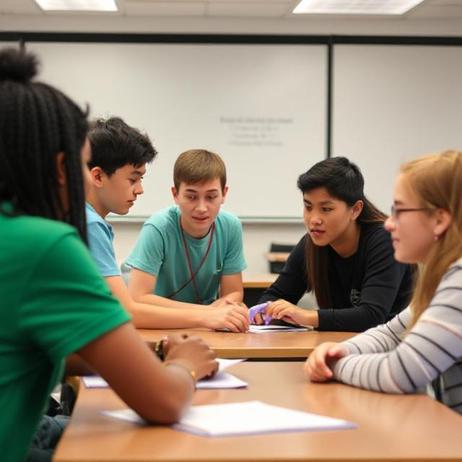
At its heart, cooperative learning is more than just putting students into groups and having them “work together.” It is a deliberately structured instructional strategy in which a teacher designs learning tasks so that students must cooperate, depend on one another, and hold themselves individually accountable.

Johnson, Johnson, and Smith (1998, 2009) popularized a framework often taught in educator preparation programs, which emphasizes five essential elements of effective cooperative learning:

  1. Positive interdependence – students perceive that they sink or swim together.

  2. Individual accountability – each student contributes and is assessed on their contribution.

  3. Promotive (face-to-face) interaction – structured interactions that require dialogue, explanation, and reflection.

  4. Social skills

. . .read more

Recent Articles

Spring Parent-Teacher Conferences: Key Questions
Spring Parent-Teacher Conferences: Questions Every Parent Should Ask to support academic growth, social development, and 2026 classroom goals.
Prepare for Spring Tests Without Anxiety
Learn how to prepare for spring standardized tests without increasing anxiety using proven strategies for families and schools.
Why Public Schools Are Launching Marketing Campaigns in 2026
Discover why public schools are launching marketing campaigns in 2026 and how enrollment shifts, school choice, and funding pressures are driving change.
Notice: Javascript file does not exist: /home/devmiha/workspace/psr/public_html/javascript/components/popper.min.js in /home/devmiha/workspace/shared/misc/JSCompiler.inc.php on line 241 Notice: Javascript file does not exist: /home/devmiha/workspace/psr/public_html/javascript/components/tippy.min.js in /home/devmiha/workspace/shared/misc/JSCompiler.inc.php on line 241 Notice: Directory does not exist in /home/devmiha/workspace/shared/misc/JSCompiler.inc.php on line 241 Notice: Unable to save compiled js file in /home/devmiha/workspace/shared/misc/JSCompiler.inc.php on line 241