Updated
|
How Public Schools Prepare Students for College: Best Practices
Learn how public schools prepare students for college through proven programs, counseling, coursework, and partnerships that support college readiness.

How Public Schools Prepare Students for College: Best Practices

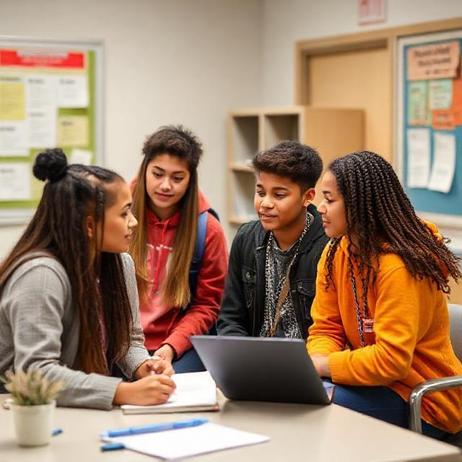
Understanding how public schools prepare students for college is essential for families evaluating academic pathways and long-term outcomes. Across the United States, districts continue to expand college-readiness initiatives that blend rigorous coursework, structured advising, workforce exploration, and personalized support. In 2025, many public school systems are refining these strategies to address rising expectations for postsecondary success. This article explains how public schools prepare students for college, highlights best practices, and outlines what families should look for when comparing schools.

Why College Readiness in Public Schools Matters

Public schools serve the majority of American students, which makes effective college preparation a national priority. For families, understanding how public schools prepare students for college provides insight into curriculum quality, teacher expertise, counseling access, and the real-world opportunities available during the high school years.

Several factors drive the need for strong college-readiness systems. College admissions have become more competitive, financial aid rules evolve each year, and students face increasing pressure to build authentic academic and extracurricular portfolios. Schools that understand how public schools prepare students for college often integrate academic, social-emotional, and logistical support.

Key drivers include:

  • Rising expectations for advanced coursework

  • Demand for dual-enrollment access

  • Need for earlier counseling and planning

  • Expansion of dir="ltr" style="list-style-type: disc; font-size: 11pt; font-family: Arial, sans-serif; color:


. . .read more

Public School Demographics & Inclusion Trends in 2025

Updated
|
Public School Demographics & Inclusion Trends in 2025
Explore key 2025 trends in U.S. public school demographics and inclusion, from rising diversity to DEI debates and policy challenges.

Public School Demographics & Inclusion: Trends for 2025

As public schools navigate an ever-changing social landscape, 2025 brings with it notable trends in demographics and inclusion. Rising diversity, shifting enrollment patterns, and debates over diversity, equity, and inclusion (DEI) are shaping the conversation in districts across the United States. This article examines key data points and emerging dynamics that parents, educators, and stakeholders should watch.

1. Changing Enrollment Patterns: A Slow but Steady Shift

1.1 Enrollment Remains Below Pre-Pandemic Levels

According to the National Center for Education Statistics (NCES), public school enrollment held nearly steady from fall 2022 to fall 2023 at 49.5 million students, but remains 2.5% below the pre-COVID peak in 2019.

Elementary and middle grade enrollment declined most sharply, while high school (grades 9–12) saw a slight increase.

  • These demographic shifts matter because declining enrollment can influence school funding, staffing, and district planning.

1.2 Regional Divergence in Enrollment Trends

  • Districts in fast-growing regions—such as parts of the Sun Belt and Southeast—are under pressure to expand capacity or rezone due to uneven population growth. Public School Review

  • By contrast, many rural or inland districts in the Rust Belt and West are seeing sharper enrollment drops, creating fiscal stress.

2. Increasing Racial and Ethnic Diversity

2.1 Long-Term Demographic Shifts

The racial and ethnic

. . .read more

Digital Learning and Public Schools: What Parents Need to Know

Updated
|
Digital Learning and Public Schools: What Parents Need to Know
A comprehensive 2025 guide to digital learning and public schools, helping parents understand tools, benefits, risks, and effective school practices.

Digital Learning and Public Schools: What Parents Need to Know

Digital learning and public schools are now deeply interconnected. Since 2020, districts have expanded technology investments, added new instructional models, and integrated online tools across grade levels. In 2025, digital learning and public schools continue to evolve at a rapid pace, creating both opportunities and challenges for families.

This guide explains what parents need to know about digital learning and public schools today, including how schools use technology, the academic impact, equity issues, and practical questions to ask administrators. The article incorporates insights from recent district initiatives, ongoing research, and interviews with public school technology leaders.

How Digital Learning Shapes Today’s Public Schools

Digital learning and public schools intersect in several ways. Schools incorporate technology into instruction, assessment, communication, and support services. Understanding this landscape helps parents better evaluate their district’s digital strategy.

Common Components of Digital Learning

Public schools typically rely on four pillars of digital learning.

1. Classroom Technology Tools

Digital tools for instruction vary by district, but commonly include:

  • Learning management systems, such as Google Classroom or Canvas

  • Adaptive learning platforms for math and literacy

  • Virtual science labs and simulations

  • Digital textbooks

  • Classroom devices like Chromebooks or tablets

For parents exploring how schools integrate digital methods,

. . .read more

Budget Cuts and Class Size Impacts in Today’s Public Schools

Updated
|
Budget Cuts and Class Size Impacts in Today’s Public Schools
How budget cuts and class size shape public education today, with insights for parents and educators.

Budget Cuts and Class Size: How Real Are the Impacts in Public Education?

Understanding how budget cuts and class size affect public education is central to how communities plan, fund, and evaluate their schools. In 2025, districts continue to navigate inflation, fluctuating state appropriations, pandemic-related academic recovery, and enrollment swings. The relationship between budget cuts and class size has become one of the defining issues for educators and families, influencing instructional quality, teacher workload, and student outcomes.

This article examines how budget cuts and class size interact, what research tells us, what parents should watch, and how districts can mitigate adverse effects. It also provides updated examples, practical insights, and authoritative references to support informed decision-making.

Why Budget Cuts and Class Size Matter

The link between budget cuts and class size appears straightforward. Fewer dollars often mean fewer staff members, which leads to larger classes. Yet the impact is far more complex. Class size shapes instructional time, teacher attention, and the ability to differentiate lessons. When budget cuts and class size rise together, schools face challenges that ripple across academic and social development.

Research consistently shows that smaller classes benefit early learners the most, particularly students from historically underserved groups. Parents can explore district-level trends through resources like Public School Review (https://www.publicschoolreview.com) to assess how budget cuts and class size may affect their local schools.

The Financial Pressures Driving Changes

Several trends are putting pressure on

. . .read more

Cybersecurity in U.S. Public Schools 2025: Risks, Policies & Protection

Updated
|
Cybersecurity in U.S. Public Schools 2025: Risks, Policies & Protection
Explore the 2025 state of cybersecurity in U.S. public schools, updated data, expert insights, policy moves, and how schools and families can stay safe.

Cybersecurity in U.S. Public Schools: 2025 Update

Introduction
In today’s digitally connected education environment, cybersecurity in public schools is now a core facet of school safety and operational integrity. As education systems across the country continue to adopt cloud tools, remote-learning platforms, and large student-data systems, the risk of malicious attacks, data breaches and operational disruption has grown significantly. This article refreshes our earlier discussion of cybersecurity in public schools with the most current data, policy developments and expert insights for 2025, offering practical guidance for parents, students and educators alike.

The Threat Landscape in 2025
The data is stark. A recent report by Center for Internet Security (CIS) found that 82 % of K-12 organizations experienced a cyber incident during an 18-month period ending in early 2025. Other research by the RAND Corporation found that across the 2023–2024 and 2024–2025 school years, 60 % of school principals reported at least one cyber incident in their school — including 45 % who cited business-email compromise or phishing. Another global-education-sector survey indicated that schools averaged 4,388 cyberattacks per organisation per week in Q2 2025, a +31 % year-over-year increase.

What does this look like on the ground? Schools report incidents ranging from phishing, ransomware, student or staff email compromise, to denial-of-service attacks and data breaches of student records. These attacks threaten student privacy, disrupt online learning and require costly remediation. For example, ransomware in the education sector often leads to

. . .read more

Recent Articles

Spring Parent-Teacher Conferences: Key Questions
Spring Parent-Teacher Conferences: Questions Every Parent Should Ask to support academic growth, social development, and 2026 classroom goals.
Prepare for Spring Tests Without Anxiety
Learn how to prepare for spring standardized tests without increasing anxiety using proven strategies for families and schools.
Why Public Schools Are Launching Marketing Campaigns in 2026
Discover why public schools are launching marketing campaigns in 2026 and how enrollment shifts, school choice, and funding pressures are driving change.
Notice: Javascript file does not exist: /home/devmiha/workspace/psr/public_html/javascript/components/popper.min.js in /home/devmiha/workspace/shared/misc/JSCompiler.inc.php on line 241 Notice: Javascript file does not exist: /home/devmiha/workspace/psr/public_html/javascript/components/tippy.min.js in /home/devmiha/workspace/shared/misc/JSCompiler.inc.php on line 241 Notice: Directory does not exist in /home/devmiha/workspace/shared/misc/JSCompiler.inc.php on line 241 Notice: Unable to save compiled js file in /home/devmiha/workspace/shared/misc/JSCompiler.inc.php on line 241