Updated
|
How School Zoning Shapes Property Values and School Quality
Learn how school zoning affects property values and public school quality, plus 2025 insights for families evaluating neighborhoods.

How School Zoning Affects Property Values and Public School Quality

Understanding how school zoning affects property values and public school quality is essential for families navigating housing decisions. In 2025, zoning boundaries continue to influence neighborhood demographics, long–term home equity, and the academic strength of local schools. Whether a family is selecting a new home or an educator is evaluating community demand, the connection between zoning and school outcomes shapes nearly every part of the public-education landscape.

This article explains how school zoning affects property values and public school quality through clear examples, current research, and practical considerations for parents. It also highlights the policy debates surrounding attendance boundaries and provides tools for comparing school options.

Throughout the discussion, the focus remains on the central question: how school zoning affects property values and public school quality across different communities.

Why Zoning Matters in Public Education

School zoning assigns students to specific campuses based on their residential address. Families often center their search for homes around district boundaries because they understand how school zoning affects property values and public school quality over time.

Three core dynamics shape this relationship:

  • High performing schools attract sustained buyer demand.

  • Neighborhoods with stable demand typically see rising home values.

  • Increased property values, in turn, boost local tax revenues which can support school improvements.

As a result, how school zoning affects property values and public school quality becomes a circular relationship in many communities.

For parents comparing districts, resources such as Public School
. . .read more

Public School Safety Protocols in 2025

Updated
|
Public School Safety Protocols in 2025
A detailed look at 2025 public school safety protocols, including new standards, technology, and staff training for safer campuses.

Public School Safety Protocols: What’s New in 2025?

Public School Safety Protocols have evolved rapidly in recent years, driven by community expectations, federal guidance, and the lessons learned from real incidents. In 2025, public districts nationwide are adopting more>This article outlines the most significant updates in 2025, examines how schools are implementing these Public School Safety Protocols, and offers guidance for families seeking to evaluate a district’s commitment to safety.

The 2025 Landscape: Why Public School Safety Protocols Are Changing

School administrators have emphasized that Public School Safety Protocols must support prevention, rapid communication, and post-incident recovery. Several developments have shaped this year’s changes.

Key drivers of 2025 Public School Safety Protocols include:

  • Rising expectations for parent communication

  • Increased federal and state funding for campus security systems

  • Greater use of behavioral-health-driven prevention

  • Stronger state-level auditing of Public School Safety Protocols

  • Expanded staff training mandates

  • New partnerships with local emergency agencies

Parents exploring district data often turn to resources such as Public School Revie to understand how Public School Safety Protocols vary across campuses.
Major Updates to Public School Safety Protocols in 2025 1. Technology Integration and Real-Time Monitoring

Districts are expanding technology deployments to create more responsive Public School Safety Protocols. In 2025, several tools are becoming standard rather than optional.

Widespread adoption includes:

  • AI-assisted camera networks that detect unusual behavior and alert safety teams

  • Digital visitor management systems at every public school entrance

  • Two-way classroom communication systems enabling teachers to report emergencies instantly

  • Anonymous reporting apps for bullying, threats, and self-harm concerns

. . .read more

Parental Involvement and Public School Outcomes

Updated
|
Parental Involvement and Public School Outcomes
How parental involvement shapes public school outcomes, achievement, and school climate with 2025 insights.

Parental Involvement and Its Impact on Public School Outcomes

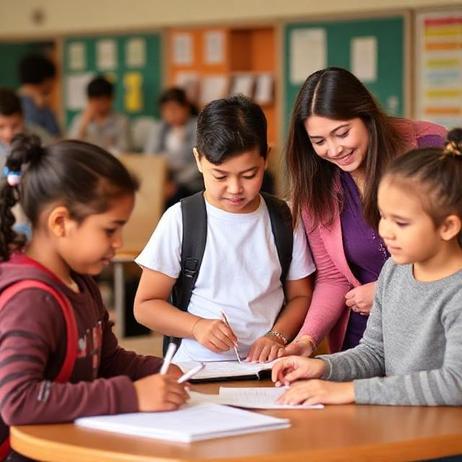
Parental involvement remains one of the most consistent predictors of student success in public schools. In 2025, as districts continue to navigate academic recovery, staffing shortages, and changing instructional models, parental involvement has become even more central to strengthening public school outcomes. Whether through daily communication, participation in school decision making, or support at home, parental involvement provides a foundation that improves academic achievement, attendance, behavior, and overall school climate.

This article examines how parental involvement shapes public school outcomes today, why some communities face persistent gaps, and what effective engagement strategies look like across diverse school settings. Throughout the discussion, the term parental involvement appears frequently to reflect the depth of its influence and to support clear SEO alignment for readers seeking research based guidance.

Why Parental Involvement Matters in 2025

Research consistently shows that parental involvement influences student performance regardless of income level, school size, or geographic region. Studies highlighted on Public School Review underline that strong parental involvement improves reading growth, math proficiency, attendance, and graduation rates. In 2025, public schools are leveraging this relationship more deliberately to close learning gaps that expanded during the pandemic years.

Parental involvement remains essential for several reasons.

  • It builds academic routines at home.

  • It supports communication between teachers and families.

  • It reinforces student motivation

. . .read more

Adult Education and Community Programs in Public Schools

Updated
|
Adult Education and Community Programs in Public Schools
Learn how public schools provide adult education and community programs that expand career skills, literacy, and workforce readiness across local communities.

Adult Education & Community Programs Offered by Public Schools

Adult Education & Community Programs Offered by Public Schools play a critical role in helping adults access new skills, prepare for the workforce, and strengthen community engagement. In communities across the United States, public school districts have expanded these programs to meet evolving economic, social, and technological needs. As districts rethink how to serve learners of every age, Adult Education & Community Programs Offered by Public Schools have become central to local workforce development, family literacy, and lifelong learning.

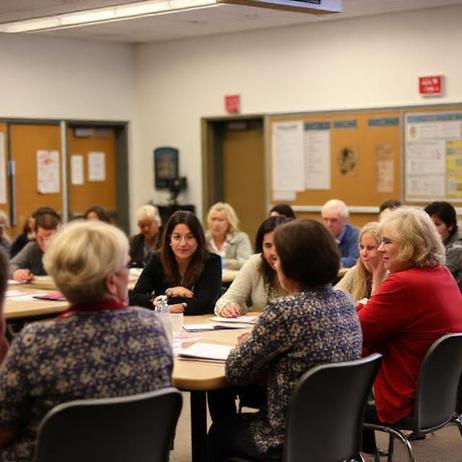
Public schools already serve as anchor institutions, so extending services to adult learners is a natural evolution of their mission. The following report examines the most common Adult Education & Community Programs Offered by Public Schools, their impact on local communities, and how districts structure programming to support diverse populations. It also highlights 2025 trends in adult learning, blended instruction, and community partnerships.

PublicSchoolReview.com provides additional context about district-level innovation and community outreach initiatives, including how public schools adapt programming to meet local demand. These insights align with the growing interest in Adult Education & Community Programs Offered by Public Schools.

Why Public Schools Are Expanding Adult Education

Adult Education & Community Programs Offered by Public Schools respond to clear economic and social needs. Districts often launch programs to address:

  • Gaps in workforce preparedness

  • Demand for English language learning

. . .read more

Public vs Private Schools in the U.S. — 2025 Guide

Updated
|
Public vs Private Schools in the U.S. — 2025 Guide
A clear, up-to-date 2025 comparison of U.S. public vs private schools: costs, enrollment, policy trends, and what families should know today.

U.S. Public vs. Private Schools: 2025 Guide

The choice between public and private schools remains one of the most consequential decisions for American families. As of 2025, the landscape reflects shifting enrollment patterns, evolving school-choice policies, and significant financial trade-offs. This guide examines the latest trends, costs, and considerations to help parents, students, and educators make informed decisions.

1. Enrollment & Demographics

Public schools continue to dominate the U.S. K–12 system. According to the Learning Policy Institute, about 91 percent of students—more than 49 million—attend one of the nation’s 99,000+ public schools. Private schools, by contrast, number around 29,700 and educate approximately 4.7 million students, or under 9 percent of the total. Private schools are primarily clustered in urban and suburban areas: roughly 83 percent are in or near cities, while only 16.6 percent serve remote or rural regions.
Regarding religious affiliation, about two-thirds of private schools—roughly 66 percent—are faith-based, with Catholic schools forming a large share.

2. Tuition, Funding & Spending

Public schools are funded largely through local, state, and federal tax revenues; they do not charge tuition for in-district students. However, public spending per pupil remains substantial: many districts now average around $14,000–$15,000 per student per year, depending on the state and district.

Private school tuition varies significantly. According to PrivateSchoolReview, for the 2025–26 school year, the national average is approximately $14,999 annually, with elementary tuition averaging $14,018 and

. . .read more

Recent Articles

Spring Parent-Teacher Conferences: Key Questions
Spring Parent-Teacher Conferences: Questions Every Parent Should Ask to support academic growth, social development, and 2026 classroom goals.
Prepare for Spring Tests Without Anxiety
Learn how to prepare for spring standardized tests without increasing anxiety using proven strategies for families and schools.
Why Public Schools Are Launching Marketing Campaigns in 2026
Discover why public schools are launching marketing campaigns in 2026 and how enrollment shifts, school choice, and funding pressures are driving change.
Notice: Javascript file does not exist: /home/devmiha/workspace/psr/public_html/javascript/components/popper.min.js in /home/devmiha/workspace/shared/misc/JSCompiler.inc.php on line 241 Notice: Javascript file does not exist: /home/devmiha/workspace/psr/public_html/javascript/components/tippy.min.js in /home/devmiha/workspace/shared/misc/JSCompiler.inc.php on line 241 Notice: Directory does not exist in /home/devmiha/workspace/shared/misc/JSCompiler.inc.php on line 241 Notice: Unable to save compiled js file in /home/devmiha/workspace/shared/misc/JSCompiler.inc.php on line 241