Warning: mkdir(): Permission denied in /home/devmiha/workspace/psr/public_html/include/srn_lib/psr/misc/QuickPhotos.inc.php on line 24 Warning: mkdir(): Permission denied in /home/devmiha/workspace/psr/public_html/include/srn_lib/psr/misc/QuickPhotos.inc.php on line 24 Warning: mkdir(): Permission denied in /home/devmiha/workspace/psr/public_html/include/srn_lib/psr/misc/QuickPhotos.inc.php on line 24 Warning: mkdir(): Permission denied in /home/devmiha/workspace/psr/public_html/include/srn_lib/psr/misc/QuickPhotos.inc.php on line 24
Updated
|
The Future of Teacher Tenure in 2026
Explore 2026 trends in teacher tenure, policy shifts, costs, salaries, and what parents should know for school planning and quality classroom instruction.

The Future of Teacher Tenure

Teacher tenure remains a central and evolving issue in U.S. public education, with major implications for school quality, staffing stability, and parent planning as families evaluate schools on behalf of their children.

What Teacher Tenure Means Today
Teacher tenure generally refers to employment protections granted to public school teachers after a probationary period, intended to ensure due process before dismissal. While tenure historically offered stability for educators, enabling them to advocate for students without fear of arbitrary termination, the policy is increasingly reexamined as districts and states respond to teacher shortages, accountability pressures, and performance concerns.

Current Landscape: Numbers, Salaries, and Teaching Workforce Trends
Understanding the modern workforce helps parents grasp how tenure fits into broader staffing dynamics:

  • The United States employs more than 3.2 million public school teachers in K-12 settings, with student-to-teacher ratios averaging around 15:1, reflecting national efforts to balance class sizes and instructional costs.

  • Teacher turnover remains high, with about 44 percent of teachers leaving the profession within their first five years and roughly 8 percent exiting annually overall. Average tenure in a school is about 3.3 years, indicating that many educators do not remain long enough to obtain traditional protections.

  • National average teacher pay is approximately $65,000, though salaries vary widely by state and urban versus rural district. Despite increases over the past decade, inflation-adjusted pay trails comparable professional wages, contributing

. . .read more

Year-Round Schooling in 2026: Updated Parent Guide

Warning: mkdir(): Permission denied in /home/devmiha/workspace/psr/public_html/include/srn_lib/psr/misc/QuickPhotos.inc.php on line 24 Warning: mkdir(): Permission denied in /home/devmiha/workspace/psr/public_html/include/srn_lib/psr/misc/QuickPhotos.inc.php on line 24 Warning: mkdir(): Permission denied in /home/devmiha/workspace/psr/public_html/include/srn_lib/psr/misc/QuickPhotos.inc.php on line 24 Warning: mkdir(): Permission denied in /home/devmiha/workspace/psr/public_html/include/srn_lib/psr/misc/QuickPhotos.inc.php on line 24
Updated
|
Year-Round Schooling in 2026: Updated Parent Guide
Explore the latest 2026 data, trends, costs, and parent planning tips in the ongoing debate over year-round schooling vs the traditional calendar.

Introduction

The discussion about whether public schools should adopt a year-round calendar continues to evolve in 2026 as families, educators, and policymakers weigh academic outcomes, cost implications, and household logistics. What once was a fringe alternative has moved into mainstream consideration, prompting questions about how calendar decisions affect student learning, family life, childcare, and long-term planning.

What Is Year-Round Schooling?
Year-round schooling typically involves redistributing the same overall number of instructional days across the entire year with shorter, more frequent breaks rather than one long summer vacation. Common models include the 45-15 schedule (45 days in session followed by 15 days off), 60-20, and 90-30 calendars. These schedules do not generally add instructional time, but they aim to reduce “summer learning loss,” maintain continuity, and provide intersession opportunities for remediation or enrichment.

Current Prevalence and Trends (2026)
About 10 percent of U.S. public schools now use a year-round or balanced calendar, a modest increase from earlier decades as districts seek solutions to post-pandemic learning challenges and scheduling inefficiencies.

In some places, year-round systems coexist with other scheduling reforms — such as later start times to support adolescent sleep health and block scheduling that allows longer class periods — illustrating a broader willingness to rethink traditional structures.

Academic Impact: Evidence and Debate
Proponents argue that balancing breaks across the year helps sustain learning. Research suggests long summer breaks can lead to significant “learning loss,” particularly in math and reading, which year-round calendars aim to mitigate.

Other

. . .read more

No Child Left Behind: Past, Present, and Future of U.S. School Policy

Updated
|
No Child Left Behind: Past, Present, and Future of U.S. School Policy
Explore how No Child Left Behind evolved into ESSA, what it means for 2025‑26 schooling, and what parents need to know about testing, admissions planning, and funding.

No Child Left Behind: Past, Present, and Future.

The No Child Left Behind Act (NCLB) reshaped American public education when it was signed into law in 2002 under President George W. Bush. It instituted annual standardized testing, accountability measures, and sanctions for schools that failed to meet progress benchmarks. Its stated goal was clear: every child would be held to the same academic standards regardless of background. This policy left a lasting imprint on U.S. schooling, both in what it achieved and what it revealed about federal education reform.

The Origins and Mechanisms of NCLB

NCLB was rooted in the Elementary and Secondary Education Act (ESEA) of 1965. Its core principles were accountability through testing, the goal of closing achievement gaps, and transparency in school performance. For years, states were required to report yearly test results in reading and math for all student groups, from economically disadvantaged learners to English language learners and students with disabilities. Failure to meet “adequate yearly progress” triggered escalating interventions and, in some cases, corrective action.

Parents entering the 2025–26 school year might not know many schools operate today under frameworks that still reflect these origins. Although NCLB itself was replaced, its legacy persists in how policymakers and educators think about data, standards, and accountability.

The Shift to ESSA: Present Policy Landscape

In 2015, Congress replaced NCLB with the Every Student Succeeds Act (ESSA). ESSA preserved annual testing in reading, math, and science but shifted much of

. . .read more

Understanding Public School Fees & Optional Costs Guide

Warning: mkdir(): Permission denied in /home/devmiha/workspace/psr/public_html/include/srn_lib/psr/misc/QuickPhotos.inc.php on line 24 Warning: mkdir(): Permission denied in /home/devmiha/workspace/psr/public_html/include/srn_lib/psr/misc/QuickPhotos.inc.php on line 24 Warning: mkdir(): Permission denied in /home/devmiha/workspace/psr/public_html/include/srn_lib/psr/misc/QuickPhotos.inc.php on line 24 Warning: mkdir(): Permission denied in /home/devmiha/workspace/psr/public_html/include/srn_lib/psr/misc/QuickPhotos.inc.php on line 24
Updated
|
Understanding Public School Fees & Optional Costs Guide
Discover what public school fees are required versus optional, with 2026 updates for parents, students, and educators on budgeting and planning.

Understanding Public School Fees & Optional Costs: What’s Mandatory vs. Optional

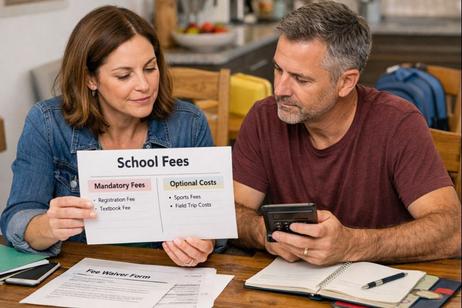
For many families, public education is synonymous with “free schooling.” However, the reality of public school fees & optional costs can be more complex. Across the United States in 2026, school districts continue to grapple with budgeting constraints, diverse local policies, and evolving educational expectations. For parents and caregivers, distinguishing between mandatory fees and optional costs is critical for effective financial planning and ensuring equitable access for all students.

This article provides an authoritative, parent-friendly guide to understanding public school fees & optional costs, what’s required versus what’s optional, and how to prepare financially without sacrificing educational opportunities.

Why Fees Exist in Public Schools

Public schools receive funding primarily through federal, state, and local taxes. Despite this base funding, many districts face budget pressures that lead them to charge fees for specific services and activities. These fees often help cover:

  • Materials and supplies

  • Transportation beyond standard routes

  • Extracurricular programs

  • Facility usage and maintenance

  • Specialized instructional programs

Understanding where these costs come from is the first step in discerning what families can expect to pay.

Core Differences: Mandatory Fees vs. Optional Costs

To make sense of school-related charges, it helps to categorize them:

Mandatory Fees
Charges that students must pay to participate in

. . .read more

Extracurricular Sign‑Ups: How to Choose Clubs, Sports, & Activities

Updated
|
Extracurricular Sign‑Ups: How to Choose Clubs, Sports, & Activities
Expert guidance for students and parents on choosing extracurricular clubs, sports, and activities ahead of term start with updated 2026 perspectives.

Extracurricular Sign‑Ups: How to Choose Clubs, Sports & Activities Ahead of Term Start

As the new school term approaches, many schools open sign‑ups for extracurricular clubs, sports teams, and activity groups. For students, parents, and educators alike, this period of choice can be exciting and overwhelming. Selecting the right mix of extracurricular activities — from competitive sports to creative clubs — can enhance academic engagement, social development, and personal growth throughout the year.

In 2026, educators continue to emphasize not just participation, but purposeful involvement. This article provides a clear, step‑by‑step guide to help families make informed decisions that align with students’ interests, goals, and well‑being.

Why Extracurricular Activities Matter

Extracurricular activities are more than just optional pastimes. Decades of research and school‑level data show that students who engage meaningfully outside the classroom develop valuable life skills, improve academic outcomes, and enjoy greater emotional well‑being. Participation can:

  • Build time management and organizational skills by balancing academics with outside interests.

  • Develop social and interpersonal skills through teamwork, communication, and leadership roles.

  • Boost confidence, resilience, and stress management as students pursue passions and overcome challenges.

  • Enhance academic engagement by giving students a sense of belonging and motivation within the school community.

These benefits intertwine with students’ identities and future goals, whether academic, athletic, artistic, or civic.

Step‑by‑Step: Choosing the

. . .read more

Recent Articles

Spring Parent-Teacher Conferences: Key Questions
Spring Parent-Teacher Conferences: Questions Every Parent Should Ask to support academic growth, social development, and 2026 classroom goals.
Prepare for Spring Tests Without Anxiety
Learn how to prepare for spring standardized tests without increasing anxiety using proven strategies for families and schools.
Why Public Schools Are Launching Marketing Campaigns in 2026
Discover why public schools are launching marketing campaigns in 2026 and how enrollment shifts, school choice, and funding pressures are driving change.
Notice: Javascript file does not exist: /home/devmiha/workspace/psr/public_html/javascript/components/popper.min.js in /home/devmiha/workspace/shared/misc/JSCompiler.inc.php on line 241 Notice: Javascript file does not exist: /home/devmiha/workspace/psr/public_html/javascript/components/tippy.min.js in /home/devmiha/workspace/shared/misc/JSCompiler.inc.php on line 241 Notice: Directory does not exist in /home/devmiha/workspace/shared/misc/JSCompiler.inc.php on line 241 Notice: Unable to save compiled js file in /home/devmiha/workspace/shared/misc/JSCompiler.inc.php on line 241