Updated
|
The History of Public Schools in the United States
Explore the history of public schools in the U.S., from colonial roots to 2026 reforms shaping equity, funding, and classroom innovation.

The History of Public Schools in the United States

Public schools have played a central role in shaping American society for more than three centuries. From their origins in colonial New England to the technology-enabled classrooms of 2026, public education has reflected the nation’s evolving values, economic needs, and social challenges. Understanding the history of public schools helps parents, educators, and policymakers better evaluate where the system stands today and where it may be headed next.

This updated overview traces the major eras of U.S. public education, highlighting key reforms, controversies, and milestones that continue to influence schools nationwide.

Colonial Foundations and Early Education Efforts

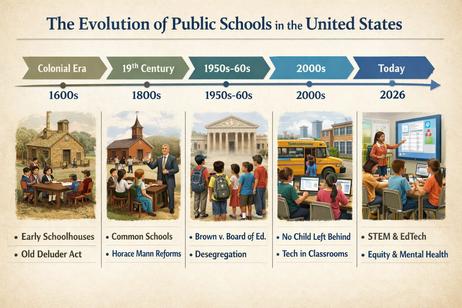
The roots of public schooling in America date back to the 1600s, when education was largely a local and religious endeavor. In Puritan New England, literacy was considered essential for reading the Bible, leading communities to establish early schools supported by town funds.

One of the most significant early laws was the Massachusetts Bay Colony’s 1647 “Old Deluder Satan Act,” which required towns to hire teachers and establish schools. While limited in scope and access, these early efforts laid the groundwork for the idea that communities shared responsibility for educating children.

Outside New England, education developed more unevenly. In the Southern colonies, private tutors and plantation-based instruction were common, while access for girls, Native Americans, and enslaved people was minimal or nonexistent.

The Common School Movement of the 19th Century

The modern concept
. . .read more

Special-Program Registration Deadlines Explained

Updated
|
Special-Program Registration Deadlines Explained
Learn what to know about special-program registration deadlines for magnet, CTE, and dual-enrollment options in public schools.

What to Know About Special-Program Registration Deadlines (Magnet, CTE, Dual-Enrollment)

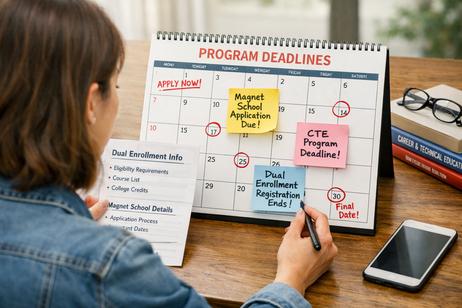
Families exploring public school options are increasingly drawn to special academic programs that offer focused coursework, career preparation, or early college credit. Magnet schools, Career and Technical Education programs, and dual-enrollment opportunities can significantly shape a student’s educational path. However, these programs often operate on timelines that differ from standard public school enrollment.

Understanding what to know about special-program registration deadlines (Magnet, CTE, Dual-Enrollment) is critical. Missing a deadline can mean waiting an entire year, even if a student is otherwise qualified. As districts refine enrollment systems and expand choice options in 2026, families must stay informed and proactive.

This guide explains how these deadlines work, why they vary, and how parents and students can plan effectively.

Why Special-Program Deadlines Are Different

Unlike traditional neighborhood school enrollment, special programs require additional planning, staffing, and often selective admissions. Districts must coordinate transportation, specialized instructors, equipment, and partnerships with colleges or employers. As a result, applications typically open earlier and close faster.

Common reasons for earlier deadlines include:

• Limited seats or capped cohorts
• Application reviews, lotteries, or auditions
• Alignment with college or industry calendars
• State reporting and funding requirements

Districts increasingly use centralized choice portals, but deadlines still vary widely by program type and region.

Magnet School Registration Timelines

Magnet schools offer specialized themes such as STEM, performing arts, language immersion, or International Baccalaureate programs. These schools

. . .read more

Guide for New Movers: Enrolling in a New School District 2026

Warning: mkdir(): Permission denied in /home/devmiha/workspace/psr/public_html/include/srn_lib/psr/misc/QuickPhotos.inc.php on line 24 Warning: mkdir(): Permission denied in /home/devmiha/workspace/psr/public_html/include/srn_lib/psr/misc/QuickPhotos.inc.php on line 24 Warning: mkdir(): Permission denied in /home/devmiha/workspace/psr/public_html/include/srn_lib/psr/misc/QuickPhotos.inc.php on line 24 Warning: mkdir(): Permission denied in /home/devmiha/workspace/psr/public_html/include/srn_lib/psr/misc/QuickPhotos.inc.php on line 24
Updated
|
Guide for New Movers: Enrolling in a New School District 2026
A 2026 step-by-step guide for new movers on enrolling children in a new public school district, including documents, deadlines, and special programs.

Guide for New Movers: How to Enroll Your Child in a New District in 2026

Relocating to a new city or state brings excitement and opportunity, but it also introduces a long list of logistics for families with school-aged children. One of the most time-sensitive tasks is enrolling your child in a new public school district. Requirements can vary widely by state and district, and policies continue to evolve in 2026, particularly around digital records, residency verification, and school choice options.

This Guide for New Movers: How to Enroll Your Child in a New District in 2026 is designed to walk families through the process step by step. Whether you are moving across town or across the country, understanding what to expect can help ensure a smooth transition for your child.

Understanding School District Boundaries in 2026

Public schools in the United States are assigned primarily based on where a family lives. School district boundaries determine which elementary, middle, and high schools a student is eligible to attend. In 2026, most districts continue to rely on geocoded address systems, which automatically assign schools once a home address is entered into the district database.

Before beginning enrollment, confirm your assigned district and schools. Many districts provide online school locator tools through their websites. If you are unsure, your local district office can verify zoning based on your lease or property documents.

Families should also be aware that some districts offer alternatives to

. . .read more

Zero Tolerance Policies in Public Schools Today

Updated
|
Zero Tolerance Policies in Public Schools Today
An updated look at zero tolerance policies in public schools, including current trends, costs, legal concerns, and what parents need to know now.

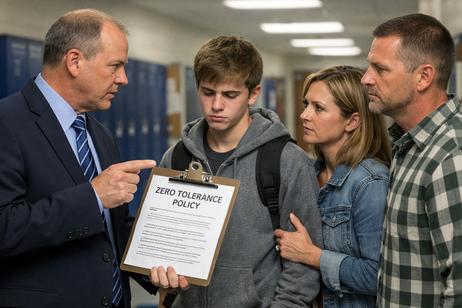
Zero tolerance policies in public schools were originally designed to create safer learning environments by enforcing strict, predetermined consequences for specific behaviors. First widely adopted during the 1990s, these policies expanded rapidly in response to concerns about school violence and drug use. Today, zero tolerance remains a familiar term for parents and educators, but its application, impact, and public perception have evolved significantly.

As families plan for upcoming academic cycles, many are asking practical questions. How are discipline policies enforced today? Do zero tolerance rules affect school choice or enrollment decisions? What are the legal and emotional consequences for students? This updated article examines how zero tolerance policies function in modern public schools, the costs and challenges associated with them, and what parents should understand when advocating for their children.

What Are Zero Tolerance Policies?

Zero tolerance policies mandate specific disciplinary actions, often suspension or expulsion, for defined infractions regardless of intent or circumstances. Commonly cited violations include weapons possession, drug-related offenses, and serious acts of violence. In some districts, earlier versions of these policies also applied to less severe behaviors such as verbal threats or repeated classroom disruptions.

While federal law still requires strict disciplinary responses for certain offenses, particularly firearms on campus, many states and districts have revised their policies to allow greater administrative discretion. Today, zero tolerance is less likely to mean automatic punishment and more likely to exist as a framework within broader student discipline codes.

How Policies Have

. . .read more

The Pros and Cons of Tracking in Schools Today

Updated
The Pros and Cons of Tracking in Schools Today
Explore the advantages and drawbacks of academic tracking in today’s public schools, including equity, outcomes, and what parents should consider.

The Pros and Cons of Tracking in Schools

Academic tracking, sometimes called ability grouping, is a long-standing practice in U.S. public education. Schools group students into different classes or course levels based on perceived academic ability, standardized test performance, or teacher recommendations. These tracks often begin in elementary school and become more formalized in middle and high school through honors, advanced placement, and remedial coursework.

Supporters argue that tracking allows schools to meet students where they are academically, while critics raise concerns about equity, access, and long-term outcomes. As districts face widening achievement gaps, post-pandemic learning loss, and increased scrutiny from families, tracking remains a complex and highly relevant issue.

This updated overview examines how tracking works today, the potential benefits and drawbacks, and what parents should consider when navigating tracked systems in current public schools.

What Is Academic Tracking?

Tracking refers to the practice of separating students into different learning pathways based on academic performance or perceived ability. These pathways may include advanced or gifted programs, grade-level classes, and remedial or intervention-focused instruction.

In 2025, tracking looks different than it did a decade ago. Many districts have shifted away from rigid labels and toward flexible grouping, competency-based progression, or course-by-course placement rather than permanent tracks. However, traditional tracking remains common, especially in middle and high schools where course sequencing affects graduation requirements and college readiness.

Placement decisions typically rely on a combination of factors, including standardized test scores, classroom performance,

. . .read more

Recent Articles

Spring Parent-Teacher Conferences: Key Questions
Spring Parent-Teacher Conferences: Questions Every Parent Should Ask to support academic growth, social development, and 2026 classroom goals.
Prepare for Spring Tests Without Anxiety
Learn how to prepare for spring standardized tests without increasing anxiety using proven strategies for families and schools.
Why Public Schools Are Launching Marketing Campaigns in 2026
Discover why public schools are launching marketing campaigns in 2026 and how enrollment shifts, school choice, and funding pressures are driving change.
Notice: Javascript file does not exist: /home/devmiha/workspace/psr/public_html/javascript/components/popper.min.js in /home/devmiha/workspace/shared/misc/JSCompiler.inc.php on line 241 Notice: Javascript file does not exist: /home/devmiha/workspace/psr/public_html/javascript/components/tippy.min.js in /home/devmiha/workspace/shared/misc/JSCompiler.inc.php on line 241 Notice: Directory does not exist in /home/devmiha/workspace/shared/misc/JSCompiler.inc.php on line 241 Notice: Unable to save compiled js file in /home/devmiha/workspace/shared/misc/JSCompiler.inc.php on line 241