Public School Rankings: Are They Accurate?
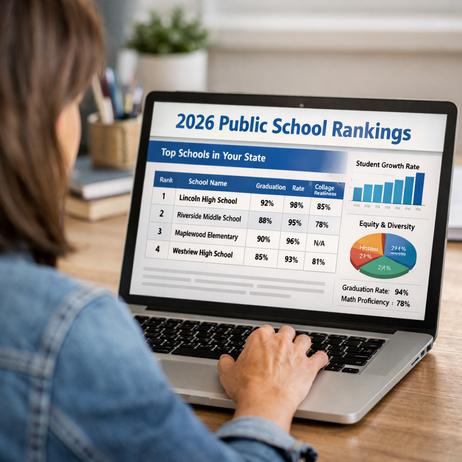
Each year, families across the country search online for the “best” schools in their area. Public school rankings promise quick answers, sortable lists, and easy comparisons. In a few clicks, parents can view a school’s position within their state, district, or even nationwide.
But are public school rankings accurate? And more importantly, do they tell the whole story?
In 2026, ranking systems are more sophisticated than ever. They draw on standardized test scores, graduation rates, college readiness indicators, and demographic data. Yet despite increased transparency and improved methodologies, school rankings remain an imperfect tool. Understanding how they work, and what they miss, is essential for families making high-stakes decisions.
How Public School Rankings Are Calculated in 2026
Most public school rankings rely on publicly available data reported to state education agencies and the federal government. Much of this information is collected through the U.S. Department of Education’s data systems and standardized testing programs.
Today’s ranking formulas typically include:
Standardized test scores in math, reading, and science
Graduation rates
College readiness indicators, such as AP or IB participation
Student growth metrics
Equity measures, including subgroup performance
Student-to-teacher ratios
For example, organizations such as U.S. News & World Report publish annual K-12 rankings