Updated
|
Failures of U.S. Public Education in 2025
Explore the 15 biggest failures of the American public education system in 2025, with updated data, expert insights, and real-world examples.

The 15 Biggest Failures of the American Public Education System in 2025

Introduction

American public education stands at a crossroads. Once hailed as a global model, the system in 2025 faces profound structural challenges undermining its promise of equity and opportunity. From declining test scores to chronic underfunding, the failures of the American public education system are deeply interconnected.

With sweeping demographic shifts, weakened federal oversight, and a surge in alternative education options, public schools are under unprecedented strain. Below are 15 of the most pressing failures—supported by the latest data, expert analysis, and real-world examples—that every parent, educator, and policymaker should understand.

1. Academic Decline

Student achievement continues to fall. The 2024 NAEP “Nation’s Report Card” reported the lowest 12th-grade reading scores in three decades, with 30% of students lacking basic proficiency. Math results were equally grim—nearly half of seniors struggled with fundamental operations (Reuters).

This failure not only affects college readiness but also weakens U.S. global competitiveness. Families are increasingly turning to private schools, as noted in the Private vs. Public Schools: 2025 Guide.

2. Widening Achievement Gaps

The achievement gap between high- and low-performing students is larger than at any point in 25 years. NAEP data show the gap is widest in eighth-grade science and math. Alarmingly, female students are now underperforming male peers in STEM—a reversal of prior gains (AP News).

This widening gap illustrates how the
. . .read more

Broward County School Bus Service Update 2025

Updated
|
Broward County School Bus Service Update 2025
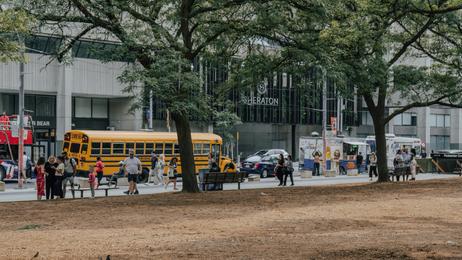
A 2025 review of Broward County public school bus service: challenges, innovations, and what parents should know.

Broward County Bus Service Issues in 2025

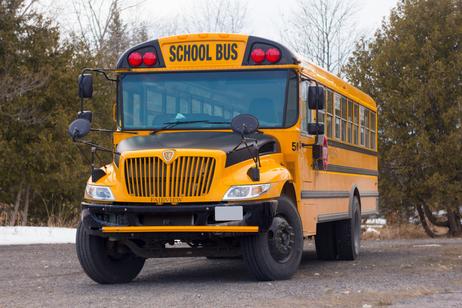
Broward County Public Schools (BCPS), one of the largest districts in Florida, continues to face persistent challenges in providing reliable school-bus transportation. While the district has taken significant steps toward modernization and safety, parents, administrators, and policymakers remain concerned about delays, rider experience, equity, and sustainability. This updated 2025 review revisits longstanding issues, highlights recent developments, and provides a forward-looking perspective for families and the community.

Context: Scale, Scope, and Constraints

As of the 2023–24 school year, BCPS enrolled roughly 251,000 students across 326 schools and educational centers, making it among the largest school districts in the nation. The Student Transportation & Fleet Services division operates just over 1,000 buses on daily routes that carry more than 73,000 students, with vehicles collectively traveling over 16 million miles each year.

Despite careful organization of routes and service zones, inequities and reliability issues remain a core challenge. In 2025, BCPS must balance budget pressures, driver shortages, and new state mandates while adapting to shifting demographics and technology.

Historical Issues

Parents have long identified several recurring transportation problems:

  • Chronic delays caused by traffic congestion and inconsistent scheduling.

  • Uneven service coverage, leaving some families without convenient access.

  • Driver shortages, leading to cancellations or last-minute changes.

  • Mechanical breakdowns among older buses.

  • Safety

. . .read more

10 Major Challenges Facing Public Schools in 2025

Updated
|
10 Major Challenges Facing Public Schools in 2025
Explore the 10 biggest challenges facing U.S. public schools in 2025, from funding shortages to mental health and technology gaps.

10 Major Challenges Facing Public Schools in 2025

The American public education system stands at a critical crossroads in 2025. While progress has been made since the pandemic, public schools face unprecedented pressures that directly impact student outcomes, teacher well-being, and long-term institutional stability. Today’s educators must navigate the complex realities of shifting demographics, technology gaps, rising mental health needs, and financial constraints.

This article examines ten of the most pressing challenges confronting U.S. public schools in 2025—why they matter, how they affect students and educators, and what potential solutions may look like.

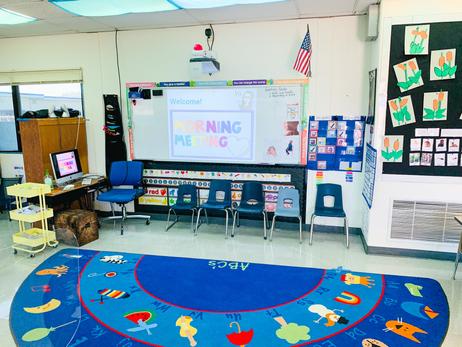
1. Classroom Size

Classroom overcrowding continues to plague many districts, particularly in growing suburban and urban areas. According to the National Center for Education Statistics (NCES, 2024), the average public school class size for grades 9–12 is now 27 students, with some high-growth states such as Texas and Florida reporting averages above 30.

Research consistently shows that smaller class sizes in the early grades (15–18 students) significantly boost academic achievement and long-term success, especially for students from low-income households. Yet staffing shortages and funding cuts often force districts to raise class size caps.

A Fairfax County, Virginia proposal in 2024 to increase class sizes by two students per grade sparked community backlash, reflecting nationwide concerns about teacher burnout and diminished individual student support.

2. Poverty

Student poverty remains one of the most significant challenges facing public schools. As of 2025, 21% of U.S.

. . .read more

Gifted & Talented Programs in Public Schools

Updated
|
Gifted & Talented Programs in Public Schools
Explore opportunities and controversies in gifted & talented programs—equity, outcomes, and models shaping public education in 2025.

Gifted & Talented Programs in Public Schools: Opportunities and Controversies

The conversation around gifted & talented programs in public schools continues to evolve in 2025, marked by expanding opportunities, deepening critiques, and fresh policy experiments. For parents, educators, and policymakers alike, the challenge is to balance the promise of accelerated, enriched learning with the demands of fairness, inclusivity, and sustainability.

This article surveys the landscape of gifted & talented (G&T) programming in public education, highlighting its benefits, controversies, and emerging trends. It aims to equip readers with a clear understanding of both the opportunities and the trade-offs involved in identifying and serving gifted learners in the public system.

What Are Gifted & Talented Programs?

Since the 1970s, the notion of giftedness has been broadly framed as high potential in intellectual, creative, leadership, or specific academic domains. The landmark Marland Report offered one of the earliest federal definitions, advocating that gifted learners need services beyond what the general classroom offers (Wikipedia).

In practice, U.S. public school systems deploy multiple models:

  • Pull-out programs or resource rooms: Gifted students leave the mainstream class temporarily for specialized enrichment.

  • Cluster grouping: Several gifted students are assigned to the same regular classroom, with the teacher differentiating instruction (Wikipedia).

  • Separate gifted classrooms or tracks: Entire classes are composed of identified gifted learners, following accelerated or enriched curricula.

. . .read more

Special Education in Public Schools: Understanding IEPs & Services

Updated
|
Special Education in Public Schools: Understanding IEPs & Services
What parents need to know about IEPs, services, rights, and how to get the best support in public schools in 2025.

Special Education in Public Schools: What Parents Need to Know About IEPs and Services

When a child has learning differences or disabilities, navigating the public school special education system can feel overwhelming. One of the core tools in this system is the Individualized Education Program (IEP). This article guides parents through what an IEP is, how services work, what to expect in 2025, and how families can play an active role.

What Is an IEP?

An Individualized Education Program (IEP) is a legally binding plan that public schools must develop for eligible children with disabilities under federal law. It outlines the special instruction, accommodations, modifications, and related services that the student needs to make meaningful progress (U.S. Department of Education).

Some key features:

  • It is developed by a team that includes parents, teachers, and specialists.

  • It is individualized — no two IEPs are the same.

  • It must be reviewed at least once per year, though it can be revised more often if needed.

The IEP is intended to ensure a Free Appropriate Public Education (FAPE) in the Least Restrictive Environment (LRE). That means the child gets education and services at no cost to the family, and in a setting that allows as much interaction as possible with non-disabled peers (Council for Exceptional Children).

Who Qualifies for an IEP

. . .read more

Recent Articles

Spring Parent-Teacher Conferences: Key Questions
Spring Parent-Teacher Conferences: Questions Every Parent Should Ask to support academic growth, social development, and 2026 classroom goals.
Prepare for Spring Tests Without Anxiety
Learn how to prepare for spring standardized tests without increasing anxiety using proven strategies for families and schools.
Why Public Schools Are Launching Marketing Campaigns in 2026
Discover why public schools are launching marketing campaigns in 2026 and how enrollment shifts, school choice, and funding pressures are driving change.
Notice: Javascript file does not exist: /home/devmiha/workspace/psr/public_html/javascript/components/popper.min.js in /home/devmiha/workspace/shared/misc/JSCompiler.inc.php on line 241 Notice: Javascript file does not exist: /home/devmiha/workspace/psr/public_html/javascript/components/tippy.min.js in /home/devmiha/workspace/shared/misc/JSCompiler.inc.php on line 241 Notice: Directory does not exist in /home/devmiha/workspace/shared/misc/JSCompiler.inc.php on line 241 Notice: Unable to save compiled js file in /home/devmiha/workspace/shared/misc/JSCompiler.inc.php on line 241