Updated
|
Virtual Charter Schools: Pros and Cons of the Growing Trend
Virtual charter schools are growing in popularity, yet are they truly helping students learn? Consider the pros and cons of virtual charter schools and if they are right for your child.

Just as the internet has changed the way Americans shop, date, and stay updated with the news, it is also changing the landscape of American education. Across the country, elementary, middle, and high school students are opting out of traditional public schools in favor of attending virtual charter schools.

Virtual charter schools provide students with online courses of study taught by licensed teachers. According to the International Association for K12 Online Learning, 200 virtual charter schools were in operation nationwide during the 2008-09 school year. Experts expect this number to grow, as the K-12 online learning industry is expanding at an estimated annual pace of 30%.

As the number of students who choose to enroll in virtual charter schools swells, critics of this new educational trend have begun voicing their concerns. Opponents believe that virtual charter schools could become a disservice to all students, and worse, a dangerous final nail in the coffin of an already weakened public education system. Meanwhile, advocates for the online educational model maintain that the individualized and customized learning that virtual charter schools enable is exactly what many modern-day students need.

This video answers common questions about virtual charter schools.

Advantages of Virtual Charter Schools

Customized, Personalized Learning

The largest advantage of virtual charter schools is their ability to offer students customized, individualized programs of study. In traditional public schools, teachers often have to

. . .read more

Are Charter Schools the Savior of Failing Districts?

Updated
|
Are Charter Schools the Savior of Failing Districts?
With President Obama's Race to the Top grant, more school districts are contemplating charter schools as a solution to their performance woes. Learn more about the benefits of charter schools and if their advantages outweighs their drawbacks in fixing our public school system.

President Obama’s Race to the Top education initiative strongly supports charter schools, but can these institutions save failing public school districts? While there are currently more than 4,700 charter schools in America, their track record is mixed. Some campuses have garnered tremendous accolades and accomplishments, while other charter schools are negatively impacted by financial management issues, spotty performance, and disruptive conflict with teachers' unions and districts.

Charter Schools: Campuses that Outperform

Charter schools can provide students with a medley of benefits that the traditional public school finds difficult to rival. Typically, charter schools have smaller classes, which foster discussion and allow teachers to spend more time with each student. Other schools have experimented with innovative teaching methods, including curriculum focused on AP coursework or even virtual learning. For example, as reported by the Washington Post, the students at the Basis Scottsdale Charter School in Arizona are required to take a minimum of six AP exams before their senior year.

While charter schools overall may have a mixed record of performance, research does demonstrate that the top charter schools outperform their traditional counterparts. As an MIT study reveals, after attending a Boston-area charter school for just one year, middle school students improved their academic performance by 15%. Another Stanford University study discovered that students attending New York City School District’s charter schools had a greater probability of closing performance gaps between themselves and their more affluent counterparts.

. . .read more

Agricultural Science Careers Begin in High School

Updated
|
Agricultural Science Careers Begin in High School
Learn about the growing trend amongst public high schools to incorporate agricultural science curriculum that prepares students for a lucrative career in the industry.

While high school is typically associated with AP exams, English Literature class, prom, and football games, some campuses today are renewing their focus on an unexpected area: agriculture!

According to the Dallas News, the study of agriculture and its related sciences is gaining popularity on a handful of public high school campuses. Specifically, students from various urban and suburban school districts throughout Texas are leading the renewed interest in agriculture sciences.

In a technology-driven economy, the growing interest in agricultural sciences challenges centurion stereotypes of the industry. As the director of the Vocational Agriculture Teachers Association of Texas asserts, agricultural education has also broadened to encompass a wide range of city-based careers from veterinary science to biomedical research.” In addition, the agricultural-based vocational programs offered to public school students are thriving in urban areas, potentially due to shifts in population trends from some of the state's more rural regions.

As agricultural science continues to reinvent itself through technological and innovative developments, more public high school students enjoy the challenges of an education and future careers in the industry.

This video reports on jobs in the agricultural science field.

The Evolution of Agricultural Sciences

While the traditional roles of agriculture were once reserved for farming, today’s agricultural education programs highlight modern business practices. Modern agricultural corporations are beginning to hire more and more researchers, experts, and analysts – all while challenging industry

. . .read more

How Much E. Coli is in Public School Lunches?

Updated
|
How Much E. Coli is in Public School Lunches?
Public schools are being scrutinized for the potential presence of E. coli in cafeteria lunches. Learn more about the movement to make school lunches safe from recalls and E. coli outbreaks.

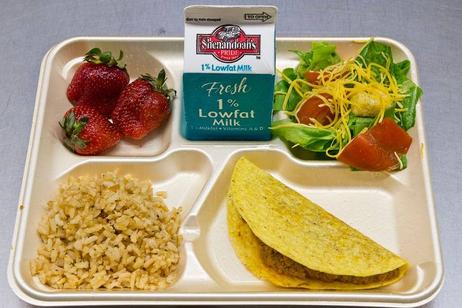
As E.coli outbreaks grow with regularity, public schools are being scrutinized for their lunches. According to Associated Press reports released in early November, the leader of the House Education and Labor Committee is investigating the health and safety of public school lunches.

After California’s representative, George Miller, brought attention to a deadly outbreak of E. coli that resulted in two deaths and dozens of reported illnesses, the government is working to ensure that school meals are protected from these dangers. Although there were no reported schools specifically impacted by the recent E. coli outbreak, Miller believes that the Government Accountability Office should take responsibility for ensuring that schools are not purchasing their meats and produce from contaminated facilities.

Are School Lunches Safe for Consumption?

In examining many political leaders’ demands for increased food safety measures in public schools, the Associated Press further reports that “Federal authorities had failed to tell schools about recalls of potentially tainted peanut products and canned vegetables, and cafeterias may have unknowingly served them to children.” Expanding on this concern, the Government Accountability Office also discovered that the U.S. Agriculture Department was inconsistent with its efforts in contacting schools about distributed food recalls.

While students from all socioeconomic backgrounds commonly purchase school lunches, an estimated 30 million students depend upon federally funded lunch and breakfast programs from school cafeterias as their only source of nutrition and sustenance. This fact alone has prompted community leaders to express their outrage over the

. . .read more

Public Technical High Schools: Are They Really Preparing Students for Work After Graduation?

Updated
|
Public Technical High Schools: Are They Really Preparing Students for Work After Graduation?
Learn about why technical public high schools are earning attention for their unique career-training opportunities.

Many public high schools are focused on preparing students for the rigors of a traditional, four-year college education. However, are other students, especially those interested in joining the workforce immediately upon graduation, being neglected in the process?

In recent years, funding issues and budget cuts have forced high schools to drop career-oriented elective courses. However, proponents of vocational education believe that the loss of these career programs has prompted many students to lose interest in high school in general.

Thankfully, there are public technical high schools throughout the country that specialize in vocational training – much to the delight of students who are interested in entering the workforce immediately upon receiving their high school diploma!

Vocational Programs: Preparation for the “Real World”

While most high schools offer on-campus vocational courses, some districts have collaborated to create district and county-wide vocational institutions. For example, Blackstone Valley Regional Vocational Technical High School, located in Upton, Massachusetts, gives high school students the opportunity to pursue an array of career-based courses, such as culinary arts, cosmetology, plumbing, healthcare, and dental assisting.

As Blackstone’s mission asserts, the high school is designed to foster “integrated academic and vocational technical skills, empowering each student to achieve world-class educational excellence, diverse career opportunities, and individual success in an ever-changing global society.”

There are, of course, similarities between Blackstone and the typical high school. Blackstone students must follow a core curriculum, such as math,

. . .read more

Recent Articles

Spring Parent-Teacher Conferences: Key Questions
Spring Parent-Teacher Conferences: Questions Every Parent Should Ask to support academic growth, social development, and 2026 classroom goals.
Prepare for Spring Tests Without Anxiety
Learn how to prepare for spring standardized tests without increasing anxiety using proven strategies for families and schools.
Why Public Schools Are Launching Marketing Campaigns in 2026
Discover why public schools are launching marketing campaigns in 2026 and how enrollment shifts, school choice, and funding pressures are driving change.
Notice: Javascript file does not exist: /home/devmiha/workspace/psr/public_html/javascript/components/popper.min.js in /home/devmiha/workspace/shared/misc/JSCompiler.inc.php on line 241 Notice: Javascript file does not exist: /home/devmiha/workspace/psr/public_html/javascript/components/tippy.min.js in /home/devmiha/workspace/shared/misc/JSCompiler.inc.php on line 241 Notice: Directory does not exist in /home/devmiha/workspace/shared/misc/JSCompiler.inc.php on line 241 Notice: Unable to save compiled js file in /home/devmiha/workspace/shared/misc/JSCompiler.inc.php on line 241