Updated
|
The Guide to a Politically Correct Holiday Classroom Party
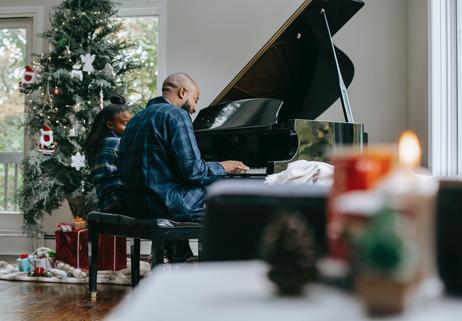
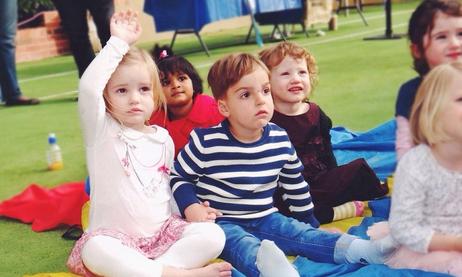
Santa, Christmas trees, and even candy canes may not be appropriate for your child's classroom holiday party. Use this guide to ensure that classroom decor is appropriate for this winter's classroom celebration.

You'd better watch out for the offensive classroom Christmas tree. You'd better not pout about prohibiting reindeer images in class. You'd better not cry about banning candy canes for your students - and we'll tell you why. Santa Claus is no longer...politically correct.

Over the past several years, the public has been divided over whether words and images related to religious holidays, such as nativity scenes, Santa, candy canes, and menorahs, are appropriate in public schools. The debate shows no sign of stopping, and recent events in Connecticut and Oregon underscore the fact that emotions can run high when it comes to discussions about politically correct winter celebrations.

Christmas Party Changed to "Celebration of Winter" in Connecticut

In Waterbury, Connecticut, an elementary school principal drew fire from school board members when he replaced the school's annual Christmas party with a "celebration of winter," according to Connecticut's Hartford Courant. The principal defended his choice to remove Christmas from the winter celebration, stating that he runs a public school and that he has to "do things that include every child."

However, two members of the district's school board took offense to the politically correct winter celebration. One of them complained that "there seems to be a war specifically targeted against those of the Christian faith," with the implication that the removal of Christmas words and images from the winter party constituted another battle wound in this war.

This video shows how to hold a politically correct holiday
. . .read more

Modern Sex Ed: Should Public Schools Provide Condoms to Students?

Updated
|
Modern Sex Ed: Should Public Schools Provide Condoms to Students?
Taking sex education to the next level of controversy, some public schools are contemplating providing free condoms to their students. Learn about the debate, pros, and cons of condom-distribution programs at public schools.

The topic of sex education always sparks intense debate, and now the conversation may become even more heated. As more public schools from New York to Milwaukee contemplate providing free condoms on campus, students are caught in the crossfire of the debate.

Milwaukee Public Schools may soon join the small ranks of public school districts nationwide to provide high school students with access to free condoms. The school district's health officials cite concerns about the spread of sexually transmitted diseases as evidence of the need for a plan to make condoms accessible to students who need them. The proposed plan would allow a student to receive two condoms after a consultation with the school nurse, who would also provide the student with literature pertaining to the risks of sexual activity.

While it is not yet clear if the Milwaukee school board will approve the plan, the proposal has resurfaced a national debate over whether condoms have a place in public high schools.

The Advocates for Condom Distribution

Those who support making condoms available as part of a public high school's sex education program make several arguments:

* Condoms Needed to Prevent Spread of Sexually Transmitted Infections
In 2008, the Center for Disease Control released a study showing that one in four teenage girls in America has at least one sexually transmitted infection, and that nearly half of African-American teenage girls had at least one sexually transmitted infection. Advocates for condom distribution in public schools point these studies as

. . .read more

Why Single-Sex Public Schools are Growing in Popularity

Updated
|
Why Single-Sex Public Schools are Growing in Popularity
This article examines the growing trend of single-sex public schools in the United States. It explores the potential benefits, research findings, and controversies surrounding gender-specific education, as well as the factors driving its increasing popularity among parents and educators.

One of the fastest-growing trends in the educational landscape of 21st-century America is single-sex education. Fueled by research studying the different learning styles between the two genders, more public schools are contemplating single-sex student populations. As the public grows more concerned about achievement gaps between girls and boys, parents are increasingly seeing single-sex public schools as an attractive alternative to conventional coeducational environments.

The Growing Support for Single-Sex Education

Fueled by a bevy of research, proponents of single-sex education tout several benefits that are not associated with coeducational campuses.

A Way to Address Gender Gaps
In the 1990s, the American Association of University Women issued a report called "Shortchanging Girls, Shortchanging America," which raised public awareness about how girls' self-esteem and proclivity for mathematical and scientific pursuits plummet as they progress through the public school system.

In the 2000s, the public's focus began to shift towards how our public school system shortchanges boys, as boys increasingly lagged behind girls in rates of high school graduation and college matriculation. While boys still tend to outscore girls in math and science achievement tests, girls tend to outpace boys in reading and writing tests.

Many advocates for single-sex schooling believe that gender-segregated classrooms can help to undo these seemingly entrenched gender disparities. Tom Carroll, chairman and founder of the Brighter Choice Charter School for Boys and the Brighter Choice Charter School for Girls in Albany, says that his schools' recently released test scores showed that his students performed better on

. . .read more

Christmas Carols: Banned on Public School Campuses

Updated
|
Christmas Carols: Banned on Public School Campuses
Traditional Christmas carols, such as "Silent Night," may be sounds of the past on public school campuses. Learn about why schools are banning Christmas carols and how some parents are protesting the changes.

Songs such as “Silent Night” and “Joy to the World” have long been considered staples of the annual holiday concerts performed by school bands, orchestras, and choirs. However, friends and family of students in New Jersey’s South Orange Maplewood School District no longer hear these songs at their annual holiday concerts. Across the nation, school districts are changing their policies, banning music with religious themes at school-sponsored events.

One parent in the South Orange Maplewood district has been engaged in a legal battle with the district since 2004 aimed at restoring Christmas carols to holiday concerts, but he has been unsuccessful thus far. Michael Stratechuck, the parent in question, filed his initial lawsuit against the school district in December 2004. In his initial complaint, Stratechuk argued that that district's policy banning music with religious themes (including instrumental versions of religious songs) from being played at the school's December concerts was a violation of the First Amendment's protection of freedom of worship.

Stratechuk appealed the district's court's ruling in favor of the school district, and the United States Appeals Court for the Third Circuit reheard the case in September 2009. Unfortunately for Stratechuk and his supporters, the appeals court recently issued a decision opinion affirming the lower court's ruling and declaring that the school district's policy does not violate the establishment clause of the First Amendment.


The Case in Favor of the Christmas Carols
Government Must Not be Hostile Towards Religion

The New York Times reported that

. . .read more

Should a Teacher’s Pay be Influenced by Student Test Scores?

Updated
|
Should a Teacher’s Pay be Influenced by Student Test Scores?
Recent initiatives propose basing an educator's compensation on student test scores, but there are certainly two sides to the debate. Learn about the pros and cons of the proposals and how they may shape teacher tenure in the future.

Teaching salaries may no longer depend simply upon tenure or the type of degree an educator holds. Instead, their compensation as teachers may be based upon how well their students perform on tests!

In 2012 former NYC mayor Michael Bloomberg recently declared that student test scores would be a deciding factor in determining which teachers should be awarded tenure and which should not. Considering that tenure influences a teacher’s pay, this declaration inherently ties together test scores and compensation. Bloomberg also made a speech in Washington, alongside the Secretary of Education Arne Duncan, in which he called upon the NY state legislature to require all school districts in the state of New York to use "data-driven systems" to evaluate teacher and principal performance.

Although such proposals for performance-based pay for teachers have historically been fiercely opposed by teachers' unions, they are gaining ground in a number of states and seem to be part of a general larger trend towards increased school accountability.

This video from PolicyEd discusses the issue of performance-based teacher pay.


Supporters: Performance-Based Pay Will Benefit Students

The ranks of performance-based pay advocates have been growing in recent years. As the New York Times reports, Mr. Duncan said during Bloomberg's recent Washington press conference that "Everyone agrees the current system is broken." Those who support basing teacher evaluations on student test scores tend to say that performance-based

. . .read more

Recent Articles

Spring Parent-Teacher Conferences: Key Questions
Spring Parent-Teacher Conferences: Questions Every Parent Should Ask to support academic growth, social development, and 2026 classroom goals.
Prepare for Spring Tests Without Anxiety
Learn how to prepare for spring standardized tests without increasing anxiety using proven strategies for families and schools.
Why Public Schools Are Launching Marketing Campaigns in 2026
Discover why public schools are launching marketing campaigns in 2026 and how enrollment shifts, school choice, and funding pressures are driving change.
Notice: Javascript file does not exist: /home/devmiha/workspace/psr/public_html/javascript/components/popper.min.js in /home/devmiha/workspace/shared/misc/JSCompiler.inc.php on line 241 Notice: Javascript file does not exist: /home/devmiha/workspace/psr/public_html/javascript/components/tippy.min.js in /home/devmiha/workspace/shared/misc/JSCompiler.inc.php on line 241 Notice: Directory does not exist in /home/devmiha/workspace/shared/misc/JSCompiler.inc.php on line 241 Notice: Unable to save compiled js file in /home/devmiha/workspace/shared/misc/JSCompiler.inc.php on line 241