Updated
|
Does Your Child Attend a “Private” Public School?
Not all public schools are created equal. In fact, some are even considered "private" public schools. Learn about the study that delves into which states have the most "private" public schools and what ramifications these statistics have on education policy and taxation.

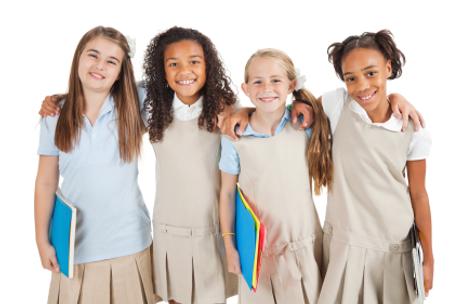
A recently issued report by the Thomas B. Fordham Institute, a non-profit educational think tank, indicates that more than 1.7 million American students attend what the report terms “private-public schools” – that is, public schools where low-income students make up less than 5% of the student body.

The Fordham Institute report criticizes these “private-public schools,” arguing that they go against the ideal of a public education system whose doors are open to everyone. The report will likely spark vehement reactions both from those who share its support of school choice reforms and those who do not.

This report from the Thomas B. Fordham Institute discusses bad schools.

The Report’s Findings

Geographic Disparities

The press release accompanying the Fordham Institute analysis highlights the fact that the percentage of students attending “private-public schools” varies from state to state. Some states boast high percentages of students attending “private-public schools,” such as:

  • Connecticut: 18%
  • New Jersey: 17%
  • South Dakota: 16%
  • Arizona: 14%
  • Massachusetts: 12%

However, in other states, no more than 1% of children attend “private-public schools.” The states with less than 1% of children attending “private-public schools” are:

  • Florida
  • Indiana
  • Iowa
  • Nevada
  • New Mexico
  • North Carolina

Racial Disparities

White and Asian students appear to be disproportionately represented in “private-public school” populations, while African-American and Latino students are under-represented. The press release accompanying the report notes that while African-American students make up 17% of public school students nationwide, they comprise only 3% of
. . .read more

Seclusion and Restraint: How Some Public Schools Allow Abuse in Classrooms

Updated
|
Seclusion and Restraint: How Some Public Schools Allow Abuse in Classrooms
Across the country, the implementation of seclusion and restraint and disciplinary measures could be considered child abuse. Learn about the policies that are being enacted in order to protect public school students.

Despite our modern approach to education, physical discipline is still being used in public school classrooms in America. Parents nationwide are expressing concern over the use of seclusion and restraint in public school classrooms. A report from the U.S. Government Accountability Office, released in May 2009, revealed that between 1990 and 2009, there had been “hundreds of allegations” of abuse involving restraint or seclusion, according to USA Today. In Texas and California alone, a combined 33,095 students were secluded or restrained in the school year leading up to the report’s issuance.

Restraint Practices

The restraint practices described in the May 2009 report could sometimes verge on what could be called child abuse. Restraint practices are commonly used to deal with students who have behavioral or emotional problems.

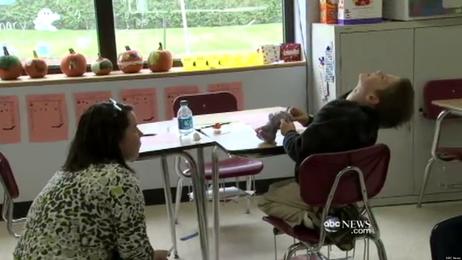
In one New York school, a 9-year-old with learning disabilities was confined to a “small, dirty room” 75 times over the course of six months as a consequence of his “whistling, slouching, and hand-waving,” reports the USA Today. Meanwhile, in Texas, a 14-year-old boy who would not stay seated in his special-education classroom died when his teacher restrained him by lying on top of him.

This video looks at the issue of restraint and seclusion.

Lack of Regulation

According to concerned parents, there is a lack of federal and state regulations addressing seclusion and restraint practices in public schools. In May 2009, USA

. . .read more

What’s Really Wrong with Detroit Public Schools

Updated
|
What’s Really Wrong with Detroit Public Schools
Detroit Public Schools have the worst test scores and graduation rates in the nation, but there are more problems plaguing the district. Learn about the internal conflict and dynamics that threaten the students' future.

Detroit Public Schools’ students recently won the award of the worst math scores in the National Assessment of Educational Progress’ 40-year history. Couple the disheartening standardized test scores with the nation’s lowest graduation rate, according to NPR, and you have a public school system that has utterly failed its students.

To further complicate the issue, Detroit Public schools are currently fighting an internal battle with Emergency Finance Manager Robert Bobb. Detroit public school teachers, administrators, parents, and school board members are upset about Bobb’s recently issued directive, outlining that all students in the district take an additional standardized test this year.

The issue of whether students should have to take this new test – on top of the STARS (Standardized Testing and Reporting), MEAP (Michigan Educational Assessment Program), PSAT, SAT, and ACT tests that they already take – is part of a larger battle for control of academic decisions between the Detroit school board and Bobb.

This video offers a look at one of the Detroit Public Schools buildings.

Why Do Detroit Schoolchildren Need a New Standardized Test?

Steve Wasko, DPS Executive Director of Public Relations, says that the new standardized test Bobb has ordered – the Quarterly Benchmark Assessment, or QBA – will be used to assess how effective the current curriculum is in helping students to meet benchmarks and achieve adequate academic progress.

. . .read more

How Should Public Schools Make Up for Snow Days?

Updated
|
How Should Public Schools Make Up for Snow Days?
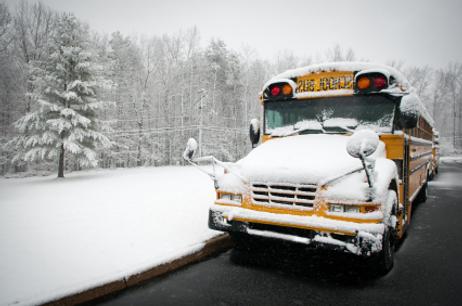
Amidst record-breaking snowfall, public schools have shut their doors for an unprecedented number of snow days. Learn about how public schools are planning to make up for the snow days, including extending school hours and even holding classes on Saturdays.

Amidst historical snowfall, school districts across America are struggling to decide how to make up the classroom time that has been lost to snowstorms.

Although many school districts have a built-in number of “inclement weather make-up days,” the unexpectedly brutal snowstorms of the past few weeks have exceeded the pre-allocated snow days. Additionally, many school administrators are worried that a large number of missed days is needed to adequately prepare students for spring’s impending standardized tests. In the coming weeks, school boards and school districts in various states will be meeting to consider how best to address this problem.

This video reports on how New York City schools will handle snow days during the 2022-23 school year.

Proposed Solutions to Snow Days

The options that school districts have thus far proposed to make up the missed days include:

Adding Days to the End of the Year

Various school districts are planning to make up the missed days by extending the last day of school in June past its planned date. In an online poll of Des Moines, Iowa residents addressing the question of how to make up the unusually high number of snow days experienced this year, the fourth most popular option (out of six choices) was adding days to the end of the school year.

Lengthening the School Day

Alexandria, Virginia’s superintendent has issued a letter to parents,

. . .read more

Understanding Education Secretary Arne Duncan: How His CEO Experience Translates for America’s Public Schools

Updated
|
Understanding Education Secretary Arne Duncan: How His CEO Experience Translates for America’s Public Schools
Learn about Education Secretary Arne Duncan and how his experience in Chicago will shape the reforms facing the American education landscape today.

As Chief Executive Officer of Chicago Public Schools during the years from 2001 to 2009, Arne Duncan enacted major changes. Now, Duncan has taken the national stage as President Obama’s Education Secretary.

Education policy experts agree that the best way to understand how American public education may change under Duncan’s guidance is to look at Duncan’s performance as CEO of the Chicago public education system. A recent New Yorker profile of Duncan highlighted the many reforms that Duncan championed during his tenure as CEO of the Chicago Public Schools, which included:

  • “The turnaround” and shutting down under-performing schools – The New Yorker article describes the turnaround as Duncan’s “signature move” as Chicago Schools’ CEO. Duncan’s “turnarounds” in Chicago involved shutting down schools that had persistent records of low performance on measures such as standardized test scores and high school graduation rates. The students whose schools were shut down would often be transferred to newly opened charter schools.
  • Opening new charter schools – Opening new charter schools was another of Duncan’s most significant undertakings as CEO of Chicago schools. The program that he championed, called Renaissance 2010, consisted of a network of charter, contract, and performance schools opened in the wake of the closures of low-performing schools.
  • Using data to track student performance – As the Chicago schools CEO, Duncan pushed for public schools to collect more data on student and teacher performance and to use the data to guide decision-making.
  • Drawing on resources outside the education community
. . .read more

Recent Articles

Spring Parent-Teacher Conferences: Key Questions
Spring Parent-Teacher Conferences: Questions Every Parent Should Ask to support academic growth, social development, and 2026 classroom goals.
Prepare for Spring Tests Without Anxiety
Learn how to prepare for spring standardized tests without increasing anxiety using proven strategies for families and schools.
Why Public Schools Are Launching Marketing Campaigns in 2026
Discover why public schools are launching marketing campaigns in 2026 and how enrollment shifts, school choice, and funding pressures are driving change.
Notice: Javascript file does not exist: /home/devmiha/workspace/psr/public_html/javascript/components/popper.min.js in /home/devmiha/workspace/shared/misc/JSCompiler.inc.php on line 241 Notice: Javascript file does not exist: /home/devmiha/workspace/psr/public_html/javascript/components/tippy.min.js in /home/devmiha/workspace/shared/misc/JSCompiler.inc.php on line 241 Notice: Directory does not exist in /home/devmiha/workspace/shared/misc/JSCompiler.inc.php on line 241 Notice: Unable to save compiled js file in /home/devmiha/workspace/shared/misc/JSCompiler.inc.php on line 241