Updated
|
Do Public Schools Perform Better without a Principal?
Teacher-operated public schools are growing in popularity, but how well do these campuses perform? Learn about the trend and the preliminary results of public schools without administrators and principals.

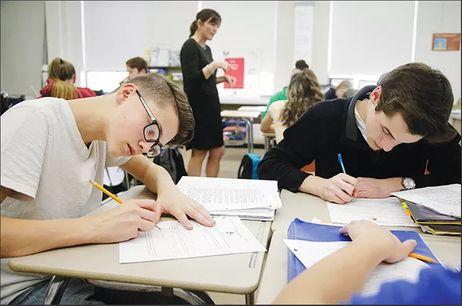
A new trend in public education is sweeping the country: the introduction of teacher-led schools that put teachers in the driver's seat of both the classroom and the daily operations of the schools at large. Teacher-led schools have begun operating in cities across the country, including Los Angeles, Denver, Boston, and Milwaukee. Recently, a new teacher-led school was introduced in Detroit as well, according to an article in Detroit Free Press.

Bye-Bye Bureaucracy

The concept of teacher-led schools started with the idea that teachers were better equipped to meet the needs of students than administrators ever could be. Teachers work with children and curriculum every day, but in traditional campuses, still need to get modifications and new programs approved by principals and school supervisors before they can put them into action. By eliminating school administration, teachers put themselves in the position of adjusting curriculum and adding programs to meet the specific needs of the students in their schools.

Many of the teacher-run schools starting today have been located in low-income neighborhoods, where students already have many socioeconomic hurdles to overcome. For example, teacher-governed schools in Minnesota and Wisconsin consist of a high number of low-income Latino students, and one school in the area boasts a 100% Native American population. Another serves gay and lesbian students who were bullied in mainstream schools, according to a report at The Free Library.

This video reports on schools without principals.
. . .read more

Education Investment Unveiled: Which State Leads the Nation in Public School Funding?

Updated
|
Education Investment Unveiled: Which State Leads the Nation in Public School Funding?
Discover which state allocates the highest funding per student in public schools. Dive into US Census Data to unveil the most financially supportive state and explore if increased spending translates to enhanced student learning outcomes.

Despite the budget cuts that have hit school districts nationwide over the past two years, recent numbers released for 2008 show that education was surprisingly healthy in the financial realm before the economic slowdown.

A recent analysis of U.S. Census Data by Bloomberg showed that public school systems spent more on education per student during this year than in the previous 16 years of education spending. An article in Bloomberg Businessweek recently reported that the average spending per student across the country was $ 10,259, with some districts spending more and others spending much less.

What the Numbers Show

The Bloomberg report was calculated for the 2007-2008 school year, and it included all 50 states. To get an accurate picture of education spending over the last two decades, numbers were adjusted for inflation. The results showed that this particular academic year boasted the biggest spending increase since at least 1992, the earliest year this type of data was available.

In a Georgia Education News blog report, Lisa Blumerman, chief of the Governments Division at the U.S. Census Bureau, said, "This report on public school spending shows us how taxpayer money is being spent on education. Public education is the single largest category of all state and local government expenditures. These data provide a detailed picture of how available resources are spent within the public education system."

School funding comes from various local, state, and federal sources. In 2008, public school systems received $582.1 billion in

. . .read more

How to Prevent Summer Learning Loss

Updated
|
How to Prevent Summer Learning Loss
Summer vacation may be a time for relaxation, but being away from school may result in significant learning loss. Learn about how you can keep your child’s brain sharp this summer.

Most kids approach summer vacation with gusto, filled with plans to enjoy the summer months without giving school a second thought. However, some parents and educators worry about what children won't be doing over the summer – such as math and reading activities that keep their minds sharp and ready to hit the ground running when school arrives again.

Summer learning loss is a very real phenomenon that has been documented by many reputable education and health care organizations. Fortunately, parents have options to prevent summer learning loss, ensuring their children are ready to hit the books again in the fall.

This video offers some ways to prevent summer learning loss.

What is Summer Learning Loss?

Summer learning loss is a phenomenon that occurs when children are out of the school environment for a significant period of time. During that absence, children can lose some of the skills they gained during the previous school year, particularly in the areas of math and reading.

According to an article on Reading is Fundamental, facts about learning loss, as studied by Johns Hopkins University's Center for Summer Learning, include:

  • Students suffer from learning loss when they do not participate in educational activities during the summer.
  • Students lose an average of about 2.6 months of grade-level equivalency in math computation skills over the summer.
  • Low-income students suffer from greater learning loss than those students in higher-income
. . .read more

Sugary Cereals Get Poured Out at Public Schools

Updated
|
Sugary Cereals Get Poured Out at Public Schools
Public schools are banning sugary cereals and other sugar-laden breakfast foods. Learn about the pioneering schools and what changes students can expect this fall.

Most parents would agree that breakfast is essential to a successful school day. The majority have applauded schools' efforts to supply breakfast to children who wouldn't get a morning meal otherwise. However, questions have been raised about the quality of the meals offered, leading some districts to change their breakfast menus.

Going Healthy in D.C.

According to the Washington Post, D.C. schools will be among the first to stop offering sugar-laden cereals and flavored milk in their cafeterias. The milk will change during the summer term, and the schools hope to open their new school year, offering healthier cereal choices to students. DCPS spokeswoman Jennifer Calloway told the Post that the system's "goal for this upcoming school year is to serve cereals with six grams of sugar or less."

Calloway added that the district would be taste-testing a variety of low-sugar alternatives to determine the selections that would be healthy and tantalizing to students' taste buds. According to Better D.C. School Food, the district was notorious for offering sugary selections like Apple Jacks, Raisin Bran, and Pop-Tarts, in addition to flavored milk that contains nearly as much sugar as a can of soda. When kids combine the flavored milk with other sugar-packed selections, they might start their day with as much as 60 grams or 15 teaspoons of sugar – before school begins!

The school district recently hired former restaurateur Jeffrey Mills as Director of Food Services for D.C. Public Schools

. . .read more

Should Public Schools Hold Graduations at Churches?

Updated
|
Should Public Schools Hold Graduations at Churches?
Public school graduations are being criticized for violating the separation of church and education mandate. Learn about the controversy facing cap and gowns in church.

When it comes times for public school graduates to march up the aisle to the tune of "Pomp and Circumstance," the venue for the ceremony becomes an issue. Many high schools do not boast a large enough gymnasium or auditorium to house a significant number of graduates and family members, and outdoor stadiums are always vulnerable to stormy weather. Public venues, like professional arenas, can be quite costly to rent, leading some schools to look for affordable alternatives within the community.

In some cities, the apparent solution has been to hold graduation ceremonies in large church buildings, and pastors have been more than happy to offer their spaces to neighboring schools. However, public school graduations in churches have raised questions across the country about the separation of church and state. In fact, some schools have actually found themselves in the midst of court proceedings as a result of inadvertently combining religion with public education.

This video looks at the issue of separation of church and state in our public schools.

A Fight at First Cathedral

First Cathedral, a non-denominational megachurch in Connecticut had opened its doors to no less than five high school graduations in previous years, according to an article in USA Today. The expansive church was chosen by the schools both for comfort and affordability.

However, not all the students and parents were comfortable holding a graduation ceremony in

. . .read more

Recent Articles

Spring Parent-Teacher Conferences: Key Questions
Spring Parent-Teacher Conferences: Questions Every Parent Should Ask to support academic growth, social development, and 2026 classroom goals.
Prepare for Spring Tests Without Anxiety
Learn how to prepare for spring standardized tests without increasing anxiety using proven strategies for families and schools.
Why Public Schools Are Launching Marketing Campaigns in 2026
Discover why public schools are launching marketing campaigns in 2026 and how enrollment shifts, school choice, and funding pressures are driving change.
Notice: Javascript file does not exist: /home/devmiha/workspace/psr/public_html/javascript/components/popper.min.js in /home/devmiha/workspace/shared/misc/JSCompiler.inc.php on line 241 Notice: Javascript file does not exist: /home/devmiha/workspace/psr/public_html/javascript/components/tippy.min.js in /home/devmiha/workspace/shared/misc/JSCompiler.inc.php on line 241 Notice: Directory does not exist in /home/devmiha/workspace/shared/misc/JSCompiler.inc.php on line 241 Notice: Unable to save compiled js file in /home/devmiha/workspace/shared/misc/JSCompiler.inc.php on line 241