Updated
|
Inclusion or Exclusion?  The ESL Education Debate
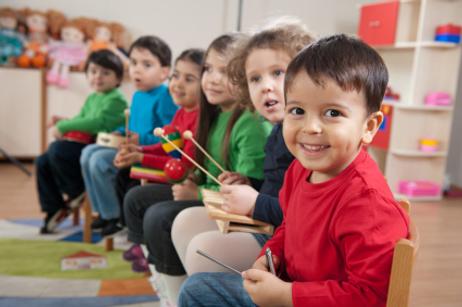
The debate over the best approach to ESL education continues to evolve with new trends and technological advancements. This article explores the pros and cons of full inclusion vs. specialized support programs for ESL students, providing insights into how schools can balance educational needs and budget constraints.

With classrooms becoming more diverse, public schools are experimenting with new language programs to enhance ESL student learning.

ESL students, standing for English as a Second Language, typically need additional resources and support to adjust to the various linguistic complications of learning a new language. As a result, ESL students typically require additional funding.

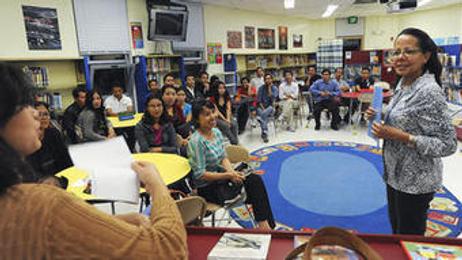
However, as public schools are coping with reduced funding due to the economic recession, educational experts debate the best approach to balancing school budgets while caring for each child’s language development. To save costs, some schools and states have created mandatory full inclusion programs, where ESL students are immersed in a regular-paced English class with fluent English speakers. This strategy will reduce the costs of ESL specialists while still engaging ESL students in an atmosphere for learning.

While this approach helps balance school budgets, many educators and parents argue that the full-inclusion classroom is ineffective for both fluent and ESL children.

Public Schools and ESL Programs

As The Multicultural Education Journal explains, the 2001 national mandate, No Child Left Behind, required all public schools to help ESL students become proficient in English, as both fluent and ESL students are mandated to meet state and national achievement standards. While public schools are legally required to provide educational support for ESL kids, many experts assert that the current approach is ineffective and flawed. As the number of minority students is rising each year in the United States, experts predict that by the


. . .read more

How is Your Child’s School Using its Stimulus Check?

Updated
|
How is Your Child’s School Using its Stimulus Check?
Learn more about how your local public school will use the new stimulus funds. Will the funding be allocated to teacher retention, special needs, or after school programs?

Through President Obama’s stimulus plans, public schools across the country are gearing up for a new source of income. Subsequently, many community members are wondering how their local schools will choose to spend the new funds. According to national reports, many schools are choosing to spend their stimulus money in unique, and much needed ways.

Public Education Stimulus Package

As AJC News reports, public schools across the country are being provided with an incredibly large stimulus check to boost school and student performance. Specifically, the new public school stimulus package is designed to provide specialized support and assistance to schools serving special education students, homeless children, and lower-income families with children. With these focus areas, the package has set aside approximately $712 million dollars for public schools.

As schools debate ways to most effectively use the funds, the United States Education Secretary, Arne Duncan, asserts that school leaders should strive to think in new, different, and creative ways. For example, as AJC further reveals, “Schools can spend the money on one-time expenses —- such as teacher training or technology aides for students with disabilities —- that can have long-term benefits for student learning.”

This video reports on President Obama's Race to the Top program.

In analyzing the funds set aside to initiate new and improved programs, The Salt Lake Tribune reveals that, in addition to directly targeted funding

. . .read more

How to Save Money When Preparing for Prom

Updated
|
How to Save Money When Preparing for Prom
Parents and students can save money while preparing for prom with these savvy tips. Learn about what schools across the country are also implementing to help ease the burden of prom.

Whether our economy is growing or declining, high school prom is almost always guaranteed to be a costly event. With the price of tickets, the cost of renting a suit, buying a dress, paying for hair appointments, and even hiring fancy transportation, students often shell out hundreds of dollars for this ultimate high school dancing celebration.

To provide students who are struggling to scrounge up the cash for all of the prom’s accouterments, many schools and leaders are creating programs and groups to stimulate community-wide support. As prom allows soon to be graduates to celebrate their long paths of education, many school leaders assert that the students should be rewarded for their efforts without worrying over how to pay for all of the costs.

This video offers suggestions on how to save money prom expenses.

The Price for Prom

As proms have become increasingly more extravagant over the years, the price for students desiring to attend has similarly soared to often outrageous heights. As USA Today reports in their article, “Prom Costs HOW Much?”, many families are struggling to afford all of prom’s “necessities.” According to USA Today, a single night of prom can cost around $400 to even $3,000 and up! According to the report, students tend to add items to the prom tab that include:

  • $90 to $150 for transportation
  • $10 to $125 (and up) for prom tickets
  • $25 to $100 on cameras and photography
  • $70 to $250 on a rental tuxedo
  • $150 to $500 (and up) for
. . .read more

Are Vouchers Destroying Public Schools?

Updated
|
Are Vouchers Destroying Public Schools?
Learn about the raging debate surrounding utilizing tax-funded vouchers to give students the freedom to choose their own public or private education -- and whether vouchers are indeed destroying the foundation of America's public schools.

School vouchers have been a controversial debate among community members and educators for more than a decade – and there are no signs of the debate simmering.

Vouchers are essentially a form of “tax scholarship” for public school students, wherein the educational tax (which typically is given directly to public schools) can be used to pay for alternative forms of education. With the voucher approach, taxes allow parents to send their children to a school of their choice; this money can even be used for private schools.

While many parents and educators believe that vouchers give students the freedom to seek out better educational opportunities, other individuals and experts assert that vouchers simply deprive struggling schools of receiving much-needed funding for improvement. With this great debate, one must question: are vouchers destroying or saving our public schools?

This video from NPR explains how vouchers work.

How Do Vouchers Work?

As public schools rely upon tax dollars for funding, each student who attends a public school is “worth” a certain amount of tax dollars. Each public school district or county is provided with a different “tax worth” for their students, which is determined in elections by community members.

For example, “District A” schools may receive $5,000 per student (annually), while “District B” may only be provided with $4,000 per student (annually). If “District A” is provided with more money and funding for each

. . .read more

Should Public Schools Provide Teenage Parents with Daycare?

Updated
|
Should Public Schools Provide Teenage Parents with Daycare?
Learn about arguments behind the debate that currently exists between proponents and opponents of providing public school daycare for teen parents.

The debate over sex education in public schools has now been extended to the question of what schools should do after students choose to have sex.

According to recent reports, teen pregnancy is on the rise across the entire country. In fact, as Martinsville Bulletin reports in “Teen Birth Rates Soar,” the national birth rate among teens aged 15 to 19 has increased by 1.4 percent from 2006 to 2007. In total, this equates to 42.5 births for every 1,000 females in this age group.

With the rising rate of teenage pregnancy, many communities are being forced to debate over whether or not public schools should provide day care programs for teen parents. Many teenage parents, especially teenage moms, choose to drop out upon giving birth to their child. Therefore, some leaders assert that public school daycare programs can help decrease the propensity for some teen parents to not reach graduation. On the other side of the argument, many public leaders and community members believe that day care only encourages irresponsible sexual choices.

The Pros of Public School Day Care

As the Martinsville Bulletin further reveals, in areas of lower income and employment rates, teenage pregnancy rates tend to rise. For example, Henry County, located in Virginia, experienced a startling increase from 33.8 children for every 1,000 females to 40.9 children for every 1,000 females (under the age of 20) over the course of just

. . .read more

Recent Articles

Spring Parent-Teacher Conferences: Key Questions
Spring Parent-Teacher Conferences: Questions Every Parent Should Ask to support academic growth, social development, and 2026 classroom goals.
Prepare for Spring Tests Without Anxiety
Learn how to prepare for spring standardized tests without increasing anxiety using proven strategies for families and schools.
Why Public Schools Are Launching Marketing Campaigns in 2026
Discover why public schools are launching marketing campaigns in 2026 and how enrollment shifts, school choice, and funding pressures are driving change.
Notice: Javascript file does not exist: /home/devmiha/workspace/psr/public_html/javascript/components/popper.min.js in /home/devmiha/workspace/shared/misc/JSCompiler.inc.php on line 241 Notice: Javascript file does not exist: /home/devmiha/workspace/psr/public_html/javascript/components/tippy.min.js in /home/devmiha/workspace/shared/misc/JSCompiler.inc.php on line 241 Notice: Directory does not exist in /home/devmiha/workspace/shared/misc/JSCompiler.inc.php on line 241 Notice: Unable to save compiled js file in /home/devmiha/workspace/shared/misc/JSCompiler.inc.php on line 241